
Apterocyclus
Waterhouse, 1871
Kauai flightless stag beetles
Species Guides
5- Apterocyclus honoluluensis(Kauai Flightless Stag Beetle)
- Apterocyclus kawaii
- Apterocyclus munroi
- Apterocyclus palmatus
- Apterocyclus waterhousei
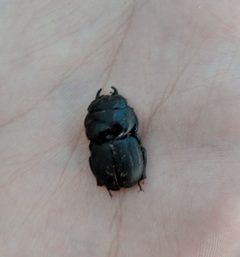
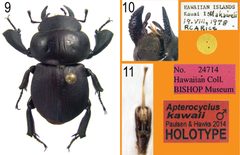
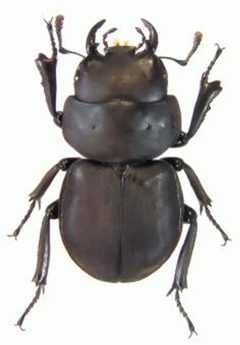
Apterocyclus is a of flightless stag beetles to the Hawaiian island of Kauai. The genus comprises five described , ranging from 14 to 23 mm in length. These beetles represent the only native scarabaeoid beetles in the Hawaiian Islands. Three species (A. honoluluensis, A. kawaii, and A. waterhousei) have been confirmed living since the late 1960s, while others may be extinct. Historical collection data shows a dramatic decline, with over 130 specimens documented between 1871 and 1922 but very few found in recent decades.
Pronunciation
How to pronounce Apterocyclus: /æptɛrəˈsɪkləs/
These audio files are automatically generated. While they are not always 100% accurate, they are a good starting point.
Identification
Images
Habitat
Found at elevations above 2,000 feet; historically occurred at lower elevations based on subfossil evidence. Occupies forested on Kauai. Formerly present in low-elevation caves (subfossil record).
Distribution
to Kauai, Hawaiian Islands, USA. No confirmed outside this island.
Behavior
Flightless; ground-dwelling. Historical evidence suggests or activity patterns typical of Lucanidae, though direct observations are limited due to rarity.
Ecological Role
Decomposer role inferred from -level , though specific contributions undocumented. Part of native forest on Kauai.
Human Relevance
Subject of conservation concern due to extreme rarity and potential extinction of some . Indicator of degradation following human of Hawaii. Scientific interest as an isolated lineage.
Similar Taxa
- Other LucanidaeApterocyclus is flightless and restricted to Kauai, unlike flying relatives on other landmasses.
- Other Hawaiian ColeopteraOnly native scarabaeoid beetles in Hawaii; all other Hawaiian beetles belong to different superfamilies.
More Details
Conservation status
Dramatic decline documented; two of five not confirmed living since the late 1960s. Low-elevation extinction linked to human arrival and associated changes. Current populations restricted to higher elevations may continued pressure from loss and .
Taxonomic history
established by Waterhouse in 1871 with description of A. honoluluensis. Additional described through 1921. Recent taxonomic work by Paulsen & Hawks added A. kawaii.