
Apterocyclus palmatus
Van Dyke, 1922
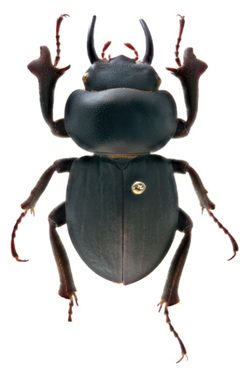
Apterocyclus palmatus is a of to the island of Kauai in the Hawaiian Islands. It was originally described in 1922 as a of Apterocyclus honoluluensis, but is now recognized as a distinct species. The species is known from only five specimens collected in 1919 at 4,000 feet elevation. No specimens have been found in recent decades, and the species may be extinct.

Pronunciation
How to pronounce Apterocyclus palmatus: //ˌæptəroʊˈsɪkləs pɔːlˈmeɪtəs//
These audio files are automatically generated. While they are not always 100% accurate, they are a good starting point.
Identification
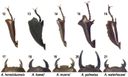
Distinguished from by long without internal teeth and the distinctive shape of the front tibia. Originally described as a of Apterocyclus honoluluensis, but elevated to status based on morphological differences.
Images
Appearance
Medium-sized with long lacking internal teeth. The front tibia has a distinctive shape that serves as a key diagnostic feature.
Habitat
Known only from montane forest at approximately 4,000 feet elevation on Kauai. Specific vegetation or substrate associations are undocumented.
Distribution
to the island of Kauai, Hawaiian Islands. No confirmed records from other islands.
Human Relevance
Of conservation concern as a potentially extinct . The lack of recent records highlights the vulnerability of isolated island insect .
Similar Taxa
- Apterocyclus honoluluensisOriginally described as a of this ; morphological differences in and tibial shape support separation.
More Details
Conservation Status
The has not been documented since 1919 despite targeted surveys, leading to concerns that it may be extinct. loss and are potential contributing factors.
Taxonomic History
Described by Van Dyke in 1922 as a of Apterocyclus honoluluensis, but subsequent taxonomic revision recognized it as a full based on consistent morphological differences.