
Hylecoetus
Latreille, 1805
ship-timber beetles
Species Guides
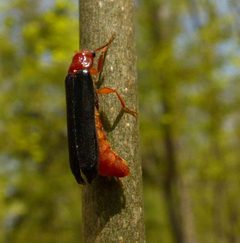
1- Hylecoetus lugubris(Sapwood Timberworm Beetle)
Hylecoetus is a of ship-timber beetles in the Lymexylidae, historically noted for the European Hylecoetus flabellicornis that infested wooden ship timbers. are attracted to light and are primarily . The genus belongs to a family whose evolutionary placement has shifted historically, now generally placed within Cucujiformia near Cleroidea and Cucujoidea, though some analyses suggest a position within Tenebrionoidea.
Pronunciation
How to pronounce Hylecoetus: /haɪliˈsiːtəs/
These audio files are automatically generated. While they are not always 100% accurate, they are a good starting point.
Images
Habitat
Forest with dead or dying hardwoods; historically also found in processed timber including ship timbers. Hylecoetus flabellicornis is native to Europe and Russia and has been introduced to North America.
Distribution
Europe, Russia; introduced to North America. The has been recorded in Norway based on GBIF distribution data.
Diet
Larvae bore into hardwoods and are believed to form symbiotic associations with ambrosia fungi that grow in their galleries. females deposit fungal spores in a sticky matrix with their , and larvae carry spores into wood on their bodies.
Host Associations
- ambrosia fungi - symbioticLarvae cultivate fungi in galleries; females inoculate wood with spores during oviposition
- hardwoods - larval Larvae bore into wood of recently dead trees, windthrows, and historically ship timbers
Life Cycle
Larvae are wood-borers that develop within hardwood galleries. Developmental details specific to Hylecoetus are poorly documented, though the likely follows the general pattern of other Lymexylidae with , larval, pupal, and stages.
Behavior
are and attracted to light. Larvae bore into wood and maintain fungal gardens.
Ecological Role
Decomposer of dead hardwoods; participates in nutrient cycling through wood decomposition facilitated by fungal .
Human Relevance
Hylecoetus flabellicornis was historically a destructive pest of wooden ship timbers, giving the its . With the decline of wooden ship construction, the has returned to natural forest . Other species in the are occasionally referenced in comparative studies of wood-boring damage potential.
Similar Taxa
- AtractocerusBoth are in Lymexylidae with reduced and elongated , but Atractocerus has highly reduced elytra exposing most of the abdomen and large suggesting predatory habits, while Hylecoetus have more conventional lymexylid and are confirmed wood-borers with fungal associations.
- LymexylonBoth are wood-boring lymexylid with fungal , but Lymexylon differ in specific morphological details and geographic distribution.
- MelittommaBoth share the lymexylid trait of ambrosia fungus in wood galleries, but differ in and specific associations.
Misconceptions
The '' derives from Hylecoetus flabellicornis, but most in the and do not infest ships or processed timber. Some species in the related genus Atractocerus are rarely encountered and their remains unknown, leading to potential confusion about family-wide traits.
More Details
Taxonomic instability
The Lymexylidae has been placed variously among Coleoptera: historically considered among the most primitive beetles due to simple wing venation and reduced body armature; later associated with Elateriformia near Lampyridae based on wing venation; and now generally placed in Cucujiformia near Cleroidea and Cucujoidea. Hunt et al. (2008) placed Lymexyloidea basally within Tenebrionoidea with moderate support.
Evolutionary significance
The oldest known lymexylid fossil is a primitive member of Atractocerus from 100 million year old Burmese amber, indicating the lineage appeared by the mid-Cretaceous and may have originated as early as the Jurassic.
Sources and further reading
- BugGuide
- GBIF taxonomy match
- iNaturalist taxon
- Catalogue of Life
- Ship-timber beetle | Beetles In The Bush
- Beitrag zum eingeschleppten Schwarzen Nutzholzborkenkäfer Xylosandrus germanus. Biologie und Schadenpotential an im Wald gelagertem Rundholz im Vergleich zu Xyloterus lineatus und Hylecoetus dermestoides | The Imported Japanese Scolytid beetle Xylosandrus germanus: Biology and Damage Potential for Stored Round Timber Compared to Xyloterus lineatus and Hylecoetus dermestoides