
Melittomma
Murray, 1867
Species Guides
1- Melittomma sericeum(Chestnut Timberworm Beetle)
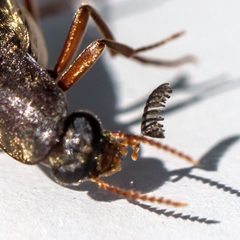
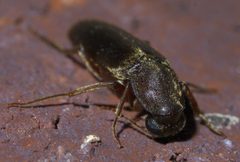
Melittomma is a of ship-timber beetles ( Lymexylidae) comprising approximately 20 described distributed pantropically. The genus is notable for larvae that bore into hardwoods and palm stems, with some species forming symbiotic associations with ambrosia fungi. Melittomma insulare is a serious pest of coconut palms in the Seychelles and Madagascar, causing structural damage that can lead to tree collapse. females deposit fungal spores in a sticky matrix with their , and larvae carry spores into wood on their bodies.
Pronunciation
How to pronounce Melittomma: //mɛˈlɪtoʊmə//
These audio files are automatically generated. While they are not always 100% accurate, they are a good starting point.
Images
Habitat
Larvae inhabit galleries bored into hardwoods and palm stems, particularly at the base of trunks. For M. insulare, is specifically coconut palm plantations and palm forests in the Seychelles and Madagascar.
Distribution
Pantropical distribution. Documented from Africa (including South Africa), Madagascar, Seychelles, Southeast Asia (Java), and the Neotropics (Brazil, Panama). Specific records include: M. insulare in Seychelles (Praslin Island, Mahé Island) and Madagascar; M. africanum in Africa; M. javanicum in Java; M. brasiliense and M. panamense in the Neotropics.
Diet
Larvae feed on fluids extracted from parenchymatous tissues of wood, not on solid wood. Feeding is associated with ambrosia fungi that grow in larval galleries.
Host Associations
- Cocos nucifera - larval coconut palm; primary for M. insulare
- Stevensonia borsigiana - larval palm in Madagascar and Seychelles
- Endemic palms (Seychelles) - primitive two unspecified palm ; original for M. insulare in Seychelles
Life Cycle
laid under cover in batches, hatching in approximately 11 days. Larval period indefinite, depending on wood sappiness. occurs in enlarged end of boring. are and short-lived.
Behavior
females deposit fungal spores in a sticky matrix when laying ; larvae carry spores into wood on their bodies. Adults are attracted to light. Larvae bore into bases of palms and hardwoods, creating extensive tunnel systems.
Ecological Role
Wood-boring beetles that facilitate fungal decomposition of hardwoods and palms. Form obligate or facultative with ambrosia fungi. Some are significant economic pests of coconut plantations.
Human Relevance
M. insulare is a serious pest of coconut palms in the Seychelles and northern Madagascar, causing extensive rotting of palm boles and tree collapse. Historical control attempts using paradichlorobenzene (1953–1958) were largely ineffective; subsequent tar-based treatments (coal tar creosote) proved more successful in reducing rates.
Similar Taxa
- AtractocerusBoth in Lymexylidae with highly reduced exposing elongated ; Atractocerus has even more reduced elytra and large suggesting predatory lifestyle, unlike Melittomma
- LymexylonBoth in Lymexylidae with larval wood-boring habits and ambrosia fungus associations; Lymexylon are primarily Palearctic and historically destructive to ship timbers
Sources and further reading
- BugGuide
- Wikipedia
- GBIF taxonomy match
- iNaturalist taxon
- NCBI Taxonomy
- Catalogue of Life
- Lymexylidae | Beetles In The Bush
- Melittomma insulare . [Distribution map].
- The control of the coconut pest Melittomma insulare (Coleoptera, Lymexylidae) in Seychelles.
- Melittomma insulare, Fairm. (Col. Lymexylonidae), a serious Pest of Coconut in the Seychelles
- The Biology of the Coconut PestMelittomma insulare(Col., Lymexylonidae), and its Control in the Seychelles
- An Investigation of the Possibilities of Biological Control ofMelittomma insulareFairm. (Coleoptera, Lymexylonidae), a serious Pest of Coconut in the Seychelles