
Dactylosternum abdominale
(Fabricius, 1792)
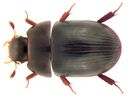
Dactylosternum abdominale is a water scavenger beetle in the Hydrophilidae, first described by Fabricius in 1792. It exhibits a remarkably broad geographic distribution spanning Africa, Australia, the Caribbean, Europe, Central America, North America, South America, and Southern Asia, with additional records from the Azores and Galápagos Islands. The belongs to the Sphaeridiinae, a group commonly known as dung beetles within the Hydrophilidae. Its widespread occurrence suggests human-mediated , though this has not been formally documented.
Pronunciation
How to pronounce Dactylosternum abdominale: //ˈdæktɪloʊˌstɜːrnəm æbˌdɒmɪˈneɪli//
These audio files are automatically generated. While they are not always 100% accurate, they are a good starting point.
Images
Distribution
Africa; Australia; Caribbean; Europe and Northern Asia (excluding China); Central America; North America; Oceania; South America; Southern Asia. Additional confirmed records from the Azores (Faial, Flores, São Miguel, Terceira) and Galápagos Islands.
More Details
Taxonomic History
Originally described as Sphaeridium abdominale by Fabricius in 1792, later transferred to the Dactylosternum.
Subfamily Affiliation
Placed in Sphaeridiinae, a of Hydrophilidae whose members are primarily associated with decaying organic matter including and compost.