
Dactylosternum
Wollaston, 1854
Species Guides
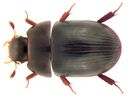
2Dactylosternum is a of water scavenger beetles in the Hydrophilidae, containing more than 20 described . Species occupy diverse microhabitats including fungal on fallen wood, decaying wood associated with , and living plant tissues such as banana trees. The genus exhibits morphological variation correlated with lifestyle: species living inside plant tissues possess a compact antennal club and parallel-sided body form, while free-living species have a loose antennal club and rounded body form.
Pronunciation
How to pronounce Dactylosternum: //ˌdæktɪloʊˈstɜrnəm//
These audio files are automatically generated. While they are not always 100% accurate, they are a good starting point.
Identification
Distinguished from other Coelostomatini by a combination of characters including antennal club structure and body form. living inside plant tissues have a compact antennal club and paralleled body form, whereas free-living species possess a loose antennal club and rounded body form. A diagnostic key for Chinese and Japanese species is available in Mai & Jia (2022).
Images
Habitat
Microhabitats include fungal on fallen wood, fallen wood with , and living plant tissues such as banana trees. Some are free-living while others inhabit enclosed plant tissues.
Distribution
Recorded from China (Guangdong, Jiangxi, Guangxi, Hubei, Hunan, Fujian, Hainan, Yunnan), Japan (confirmed for D. abdominale; doubtful for D. latum), and Colombia (Boyacá, Cauca).
Host Associations
- fungal hyphae on fallen wood - D. nanlingensis
- termites - D. songxiaobini from fallen wood with
- banana trees - D. pseudolatum and D. frater
Behavior
Morphological traits correlate with lifestyle: compact antennal club and paralleled body form in inhabiting plant tissues; loose antennal club and rounded body form in free-living species.
More Details
Taxonomic history
Dactylosternum vitalisi Orchymont, 1925 has been synonymized with D. latum (Sharp, 1873). The type series of D. vitalisi was found to contain two , with some belonging to D. pseudolatum Mai et Jia, sp. nov.
Species diversity
The contains at least 23 described , with four new species described from China in 2022: D. nanlingensis, D. songxiaobini, D. pseudolatum, and D. frater.