
Carcinops
Marseul, 1855
clown beetles
Species Guides
6- Carcinops corticis
- Carcinops opuntiae(clown beetle)
- Carcinops pumilio(poultryhouse pill beetle)
- Carcinops tejonicus
- Carcinops viridicollis(clown beetle)
- Carcinops wenzeli
Carcinops is a of clown beetles in the Histeridae, containing at least 50 described . These small beetles are known primarily from their role as agents in poultry operations, where they prey on fly and larvae. The genus was established by Marseul in 1855 and belongs to the Dendrophilinae.

Pronunciation
How to pronounce Carcinops: //kɑːrˈsɪnɒps//
These audio files are automatically generated. While they are not always 100% accurate, they are a good starting point.
Identification
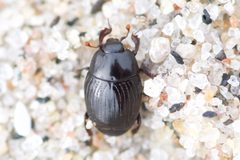
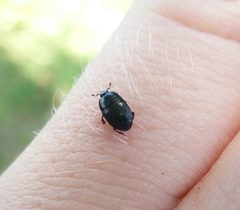
Members of Carcinops are small beetles, approximately 1/8 inch (3–4 mm) in length, with black coloration. As histerid beetles, they possess the -characteristic shortened that expose part of the , and clubbed . -level identification requires examination of genitalia and other fine morphological details not visible without magnification.
Images
Habitat
Carcinops inhabit decaying organic matter, particularly animal manure. In agricultural settings, they are found in the surface layers of poultry manure in caged-layer and broiler houses. They require dry to moderately moist conditions and are most abundant in undisturbed manure accumulations.
Distribution
Records exist from Denmark, Norway, and Sweden. The has been documented in North America, where Carcinops pumilio is utilized in poultry pest management. The full natural range extends across multiple continents, though specific distribution data for most remains limited.
Diet
and larvae feed on house fly (Musca domestica) and first-instar larvae. Carcinops pumilio has been observed consuming 13 to 24 house fly eggs per day.
Life Cycle
Both and stages inhabit the surface layers of manure. Developmental details for most are poorly documented. The progresses through , larval, pupal, and adult stages, with multiple possible annually under favorable conditions.
Behavior
are active in manure surface layers. They are known to self-propagate in poultry facilities when manure is left undisturbed and maintained in dry conditions. The beetles avoid deeply buried substrates, remaining in the upper manure layers where fly are concentrated.
Ecological Role
Significant agent of manure-breeding flies in poultry operations. Functions as a that reduces house fly naturally, contributing to systems. Part of a complex of beneficial arthropods including predatory mites and that regulate fly populations in animal agriculture.
Human Relevance
Carcinops pumilio is actively encouraged in poultry houses as part of biological fly control programs. Reducing fly improves animal health, decreases nuisance to nearby , and lowers reliance on chemical . Proper manure management practices that preserve these beetles can reduce chemical residues in , meat, and the environment.
Similar Taxa
- GnathoncusAnother histerid found in poultry manure, though present at lower densities than Carcinops.
- Macrochelis muscaedomesticaeA predatory mite that occupies similar and feeds on the same prey (house fly and larvae), but distinguished by much smaller size (<1/16 inch), reddish-brown color, and eight legs as an arachnid rather than six legs as a .
More Details
Conservation in agriculture
are best preserved by maintaining dry manure conditions (30% moisture or less), avoiding broad-surface applications in manure pits, and removing manure only during fly-free periods of the year. Residual insecticides and excessive moisture both suppress populations.