
Helophorus tuberculatus
(Gyllenhal, 1808)
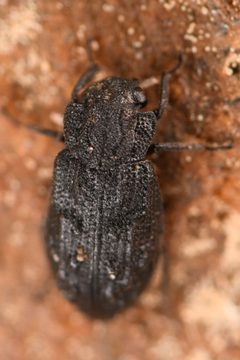
Helophorus tuberculatus is a Holarctic of water scavenger beetle in the Helophoridae. It is distributed across northern Europe, Russia, northern Asia, and North America. The species inhabits aquatic environments and is part of a known for species-specific pronotal granulation that aids identification. Like other Helophorus species, it is presumed to have terrestrial larvae.
Pronunciation
How to pronounce Helophorus tuberculatus: /hɛˈlɒfərəs tuːˌbɜːrkjʊˈleɪtəs/
These audio files are automatically generated. While they are not always 100% accurate, they are a good starting point.
Identification
Helophorus tuberculatus can be distinguished from by -specific granulation patterns on the pronotum. Identification relies on examination of these surface sculpturing details rather than genitalia in preserved specimens. The species lacks the extremely long-living status of H. sibiricus, which has been documented from Miocene fossils.
Images
Habitat
Aquatic ; specific microhabitat preferences for H. tuberculatus are not well documented. Related in the inhabit standing waters including temporary pools.
Distribution
Holarctic: Europe (Belgium, Belarus, Czech Republic, Germany, England, Finland, France, Great Britain, Georgia, Latvia, Lithuania, Netherlands, Norway, Poland, Sweden, Switzerland), Russia (Novosibirsk, East Siberia, Far East), Bhutan, Nepal, China (Sichuan), Canada (Alberta, British Columbia, Manitoba, New Brunswick, Nova Scotia, Ontario, Quebec, Saskatchewan, Yukon), and USA (Alaska, Iowa, Illinois, Indiana, Massachusetts, Michigan, New York, Oregon, Washington, Wisconsin). Fossil records from late Pliocene of Yukon Territory, Canada.
Life Cycle
Larvae are presumed to be terrestrial and , based on patterns observed in other Helophorus . Specific details for H. tuberculatus have not been documented.
Ecological Role
As an aquatic , likely contributes to nutrient cycling in freshwater systems. larvae may regulate of small in terrestrial adjacent to water bodies.
Similar Taxa
- Helophorus sibiricusSimilar pronotal granulation patterns and general , but distinguished by distribution and the remarkable 16-23 million year fossil record of H. sibiricus from Siberian Miocene deposits. H. tuberculatus lacks this documented long-lived status.
- Other Helophorus speciesRequire examination of pronotal granulation patterns for reliable identification; many overlap in general body form and aquatic use.
Sources and further reading
- BugGuide
- GBIF taxonomy match
- iNaturalist taxon
- Bembicid Holdings | Entomology Research Museum
- Cretonthophilus tuberculatus Archives - Entomology Today
- A living species of aquatic beetle found in 20-million-year-old sediments | Blog
- Pensoft Editorial Team | Blog - Part 158
- Hundred-Million-Year-Old Beetle Provides Clues to the Past