
Helophorus
Fabricius, 1775
Species Guides
13Helophorus is the sole in the Helophoridae, a group of small water beetles in the superfamily Hydrophiloidea. The genus contains approximately 180 living distributed primarily across the Holarctic region, with the majority occurring in the Palearctic. These beetles occupy diverse aquatic and semi-aquatic , from temporary pools to permanent water bodies, with some species exhibiting terrestrial habits. The genus has attracted scientific attention due to its remarkable evolutionary longevity, with some extant species persisting for 16-23 million years.
Pronunciation
How to pronounce Helophorus: //hɛˈlɒfərəs//
These audio files are automatically generated. While they are not always 100% accurate, they are a good starting point.
Identification
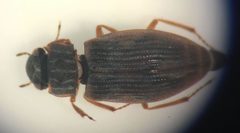
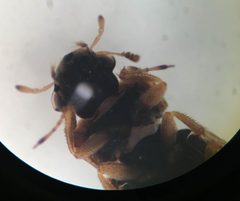
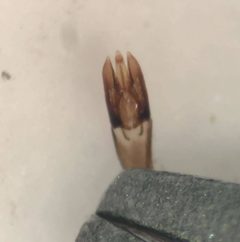
Distinguished from other hydrophiloid beetles by the combination of small size, elongate body, and the diagnostic seven longitudinal grooves on the granulate pronotum. The pronotal pattern is -specific and has been used to identify fossil specimens even when genitalia are not preserved. The interrupted outline between pronotum and separates Helophorus from many similar water beetles. Species-level identification requires examination of male genitalia and detailed pronotal granulation patterns.
Images
Appearance
Small beetles, 2–9 mm in length, with an elongate body form. The pronotum and meet with a more or less interrupted outline. The pronotum bears distinctive granulate with a unique pattern of seven longitudinal grooves. The surface exhibits fine microsculpture and is pubescent. Larvae possess long, three-segmented urogomphi, a simple (non-lobate) eighth , four-segmented legs, and a ten-segmented with the tenth segment somewhat reduced.
Habitat
Most inhabit shallow aquatic environments including the periphery of rivers and streams, stagnant pools, and temporary water bodies. Some species occupy strictly terrestrial . Specific habitat preferences vary by species: H. brevipalpis occurs in temporary pools and puddles, often in cattle-trodden areas with organic debris; H. strigifrons is restricted to permanent waters; H. sibiricus predominantly inhabits grassy temporary pools; H. villosus occupies well-heated spring puddles and ponds.
Distribution
Primarily Holarctic, with approximately 150 in the Palearctic and 41 in North America. Disjunct occur in the Afrotropical region (six species in Ethiopian Highlands and southern Africa), Central America (two or three species), and the Indomalayan region (one species in northern India). The fossil record extends to the Late Jurassic of Asia, with modern species documented from Pleistocene deposits in North America.
Seasonality
activity varies by and permanence. Species in temporary pools typically emerge and disperse during spring and summer when water is present. H. brevipalpis shows mass summer during of ephemeral habitats. H. strigifrons adults are most abundant in spring. Some species overwinter as adults and breed in spring. H. villosus is not observed in summer after temporary water bodies dry up.
Diet
generally feed on decaying plant material, though some consume living plant tissue. Several species are documented agricultural pests: H. nubilus feeds on wheat, and multiple species damage turnips, rutabaga, and wheat. Larvae are predominantly , preying on various , though some species are herbivorous and share the pest status of adults on root crops.
Host Associations
- Triticum aestivum - pestH. nubilus documented as serious pest in East Anglia
- Brassica rapa - pestTurnip pest, multiple implicated
- Brassica napobrassica - pestRutabaga pest
Life Cycle
Most are , with one per year. typically overwinter. are laid in spring in shallow water or moist soil. Larval development is rapid, especially in temporary pools. occurs in late spring to early summer. New adults emerge in summer. Some species exhibit , including triploidy in H. brevipalpis and H. aquila. Larvae of most species are terrestrial even when adults are aquatic.
Behavior
Strong capability enables and of ephemeral . H. brevipalpis is an effective colonizer due to well-developed flight musculature and large capacity, with mass flights observed. H. strigifrons exhibits flight muscle dimorphism and limited dispersal. Flying individuals of both rarely contain food in the gut. Spring flights in H. brevipalpis may favor outbreeding as fliers are sexually ; sexually mature spring fliers function as efficient colonizers. densities can reach 100 individuals per square meter in favorable years.
Ecological Role
contribute to decomposition of plant material in aquatic and semi-aquatic systems. Larvae function as in terrestrial , controlling . Some serve as indicators of stable long-term environments, with H. sibiricus persisting in temporary pools for approximately 20 million years. The represents an ancient lineage with fossils dating to the Late Jurassic.
Human Relevance
Several are agricultural pests of wheat, turnips, and rutabaga, causing economic damage through larval root-feeding and feeding on above-ground plant parts. H. nubilus was recorded as a serious wheat pest in East Anglia in the 1930s. Some species are rare and protected in parts of their range; H. villosus is proposed for inclusion in the Red Book of Ukraine.
Similar Taxa
- HydrochidaeMay be sister to Helophoridae; both are small hydrophiloid beetles with aquatic habits, but Hydrochidae lack the distinctive seven-grooved pronotal of Helophorus
- HydrophilidaeHistorically included Helophorinae as ; separated by pronotal groove pattern and body form, with Hydrophilidae typically having more convex bodies and different antennal club structure
More Details
Evolutionary longevity
Helophorus sibiricus demonstrates exceptional persistence, with fossils from 16-23 million years ago in Siberia assignable to the extant species. This challenges earlier estimates of 2-3 million years as average insect species duration. The stability of temporary pool environments may explain this longevity.
Chromosomal diversity
The exhibits notable chromosomal variation including and . H. brevipalpis includes both and triploid , with the latter occurring in Provence, France. H. aquila in China is parthenogenetic and triploid. Chromosomal studies have resolved cryptic , as in the separation of H. aequalis from H. aquaticus through reciprocal .
Subgeneric classification
The is divided into multiple subgenera: Atracthelophorus, Cyphelophorus, Empleurus, Eutrichelophorus, Gephelophorus, Helophorus, Orphelophorus, Rhopalohelophorus, and Transithelophorus. These subgenera are distinguished by pronotal and genitalic characters.
Sources and further reading
- BugGuide
- Wikipedia
- GBIF taxonomy match
- iNaturalist taxon
- NCBI Taxonomy
- Catalogue of Life
- A living species of aquatic beetle found in 20-million-year-old sediments | Blog
- Pensoft Editorial Team | Blog - Part 158
- DAMAGE TO WHEAT BY HELOPHORUS NUBILUS F
- First record of Helophorus villosus Düftschmid, 1805 (Coleoptera: Hydrophyloidea: Helophoridae) in Ukraine
- Habitats, life histories, migration and dispersal by flight of two water‐beetles Helophorus brevipalpis and H. strigifrons (Hydrophilidae)
- Out of the Palaearctic: the Helophorus water beetles of the Afrotropical Region (Coleoptera: Helophoridae)
- The Ecology ofHELOPHORUS ARCTICUSBrown (Coleoptera: Hydrophilidae) Reconsidered
- The fossil occurrence of Helophorus arcticus Brown (Coleoptera: Hydrophilidae) in Pleistocene deposits of the Scarborough Bluffs, Ontario
- Separation of two species standing as Helophorus aquaticus (L.) (Coleoptera, Hydrophilidae) by banded chromosome analysis
- Triploidy in parthenogenetic Chinese Helophorus aquila.
- Triploid female Helophorusbrevipalpis Bedel, 1881 in Provence, France, with additional data on C-banding in both triploid and diploid material, and discussion of chromosomal variation in H.brevipalpis.
- An updated Atlas of Helophorus chromosomes.