
Mastinocerini
LeConte, 1881
Genus Guides
4- Cenophengus(glowworm beetles)
- Distremocephalus(glowworm beetles)
- Paraptorthodius(glowworm beetles)
- Stenophrixothrix(railroad-worm)
Mastinocerini is a tribe of glow-worm beetles within the Phengodidae, comprising at least 190 described across 24 . Members of this tribe are distributed primarily in the New World, with significant diversity in Central and South America. The tribe was established by LeConte in 1881 and includes the type genus Mastinocerus. These beetles are notable for their bioluminescent larvae, which use light production to lure prey.
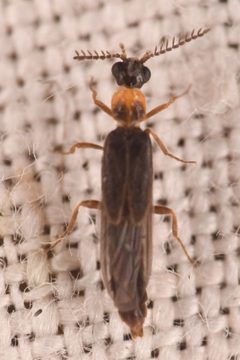
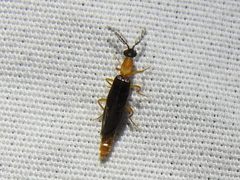
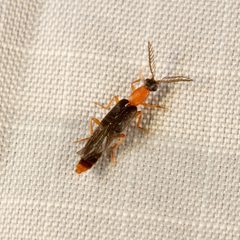
Pronunciation
How to pronounce Mastinocerini: /ˌmastɪnoʊˈsɛrɪnaɪ/
These audio files are automatically generated. While they are not always 100% accurate, they are a good starting point.
Identification
of Mastinocerini can be distinguished from other phengodid tribes by their relatively elongate body form and reduced or modified in females, which retain a appearance. Males possess fully developed wings and hardened elytra. Larvae are elongated, segmented, and possess paired luminous organs on the body segments, producing a characteristic green or yellow glow. The tribe can be separated from the related tribe Phengodini by differences in antennal structure and the arrangement of luminous organs.
Images
Habitat
within Mastinocerini inhabit moist terrestrial environments, including tropical and subtropical forests, riparian zones, and humid woodland areas. Larvae are found in soil, leaf litter, and decaying wood, where humidity remains consistently high.
Distribution
The tribe is distributed throughout the Americas, with records from the United States (primarily southern and western regions), Mexico, Central America, and South America. The highest diversity occurs in tropical regions of Brazil and other South American countries.
Diet
Larvae are predatory, feeding on soft-bodied including snails, slugs, and other soil-dwelling organisms. They use their to attract prey. feeding habits are poorly documented; adults of many may be non-feeding or consume limited food such as nectar.
Life Cycle
Development includes , larva, pupa, and stages. Larvae are the primary feeding and growth stage, often persisting for multiple years. occurs in soil or protected cavities. Adults are relatively short-lived and primarily focused on .
Behavior
Larvae are and actively forage at night, using bioluminescent displays to attract prey. When disturbed, larvae may curl into a defensive posture. are typically nocturnal and attracted to light; males fly while females are often or have limited mobility due to their .
Ecological Role
Larvae function as in soil and litter , helping regulate of mollusks and other soft-bodied . Their makes them a subject of ecological and biochemical research regarding predator-prey interactions and signal evolution.
Human Relevance
Mastinocerini have contributed to scientific understanding of mechanisms and their evolutionary origins. Some species are collected for research purposes. They have no significant agricultural or economic impact, though their larvae may occasionally be encountered by gardeners or naturalists.
Similar Taxa
- PhengodiniThe other major tribe in Phengodidae; differs in antennal and arrangement of larval photophores, with Phengodini typically having more complex antennal structures.
- RhagophthalmidaeA related of glow-worm beetles with bioluminescent larvae; distinguished by differences in wing venation and larval body segmentation.
More Details
Taxonomic History
The tribe has undergone significant revision, with many described by Wittmer in the 1960s–1980s based primarily on South American material. The genus Mastinocerus, established by Solier in 1849, serves as the type genus.