
Cenophengus
LeConte, 1881
glowworm beetles
Species Guides
3- Cenophengus debilis(glowworm beetle)
- Cenophengus longicollis(Long-necked Phengodid)
- Cenophengus pallidus(Pale South Texas Glowworm)
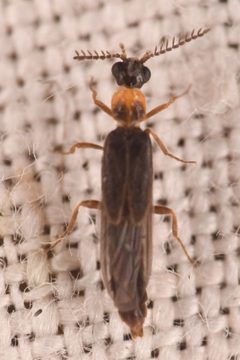
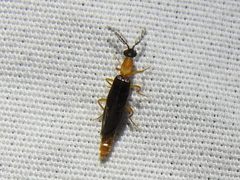
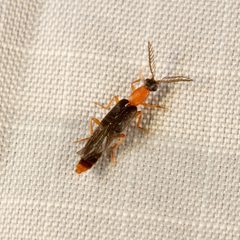
Cenophengus is a of glowworm beetles ( Phengodidae) comprising 30 valid distributed across the Nearctic and Neotropical regions from the southwestern United States through Central America. Males are the only known life stage; females and stages remain undiscovered for all species. The genus was revised taxonomically in 2021, with new species described and geographic records expanded to include Belize and Honduras for the first time.
Pronunciation
How to pronounce Cenophengus: //sɛn.oʊˈfɛn.ɡəs//
These audio files are automatically generated. While they are not always 100% accurate, they are a good starting point.
Identification
Males are distinguished from related glowworm beetle by the combination of: 12 antennomeres with two symmetrical rami on antennomeres 4–11 (not 3–11 as in some relatives); pronotum distinctly longer than wide; and leaving three (not fewer) abdominal segments exposed. -level identification requires examination of , particularly the shape and armature of the parameres. A published key to all 30 valid species is available in the 2021 revision.
Images
Distribution
Nearctic and Neotropical regions: southwestern United States (California, Texas), Mexico, Guatemala, Belize, Honduras, and Rica. First records for Belize and Honduras were established in 2021.
Life Cycle
Only males are known; females and stages (including larvae) have not been discovered for any .
Human Relevance
No documented economic or medical importance. The is of interest to coleopterists due to its taxonomic complexity and the persistent mystery of undiscovered female and larval stages.
Similar Taxa
- Other Phengodidae genera (e.g., Mastinocerus, Phengodes)Share -level traits including and abbreviated , but differ in antennal structure (rami number and placement) and pronotum proportions.
- Lampyridae (fireflies)Also bioluminescent beetles with soft bodies, but belong to a different with distinct wing venation, tarsal formula, and male genitalia structure.
More Details
Taxonomic history
The was established by LeConte in 1881. A comprehensive revision in 2021 (ZooKeys 1068) described four new , established one new synonymy (C. guerrerensis = C. major), and provided distribution maps and a complete identification key. The authorship date is sometimes cited as 1861 (Catalogue of Life) versus 1881 (original description and NCBI); 1881 is correct based on LeConte's original publication.
Missing life stages
The complete absence of known females and larvae across all 30 is exceptional among Coleoptera and suggests these stages may be , neotenic, or otherwise cryptic. This gap in knowledge hinders understanding of the 's and .