
Pyropyga decipiens
(Harris, 1836)
Sneaky Elf
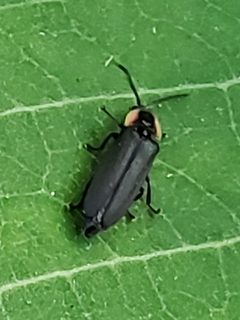
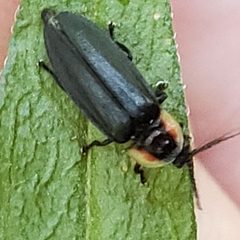
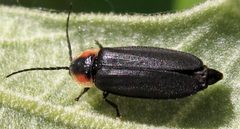
Pyropyga decipiens is a firefly in the Lampyridae, commonly known as the 'Sneaky Elf.' It belongs to the 'dark firefly' group—species that lack the conspicuous bioluminescent flashes typical of better-known fireflies. The species is widely distributed across North America, with records from New Brunswick, Canada, throughout the United States, and into the southwestern regions. Despite being one of the most common fireflies in parts of the western United States, particularly the Front Range of Colorado and the Southwest, it was notably omitted from major firefly field guides. are or and do not produce the dramatic light displays associated with other firefly .
Pronunciation
How to pronounce Pyropyga decipiens: //paɪˈɹoʊpɪɡə dɪˈsɪpiːɛnz//
These audio files are automatically generated. While they are not always 100% accurate, they are a good starting point.
Identification
Pyropyga decipiens can be distinguished from flashing fireflies ( Photinus, Photuris, Pyractomena) by its lack of prominent light-producing organs. It is most reliably identified by dissection of genitalia, as is common for many microlepidoptera and small beetles. The genus Pyropyga was notably omitted from 'A Field Guide to Common Fireflies of North America' in Sara Lewis's book 'Silent Sparks,' which has caused some confusion in field identification. -level identification within Pyropyga requires expert examination.
Images
Habitat
Found across diverse North American including the Front Range of Colorado, southwestern United States, and eastern North America. As a 'dark firefly,' it is active during daylight or twilight hours rather than in complete darkness.
Distribution
North America, with confirmed records from New Brunswick, Canada, throughout the continental United States including the Front Range of Colorado, the Southwest, and eastern regions. Global presence is recorded but North American distribution is primary.
Behavior
As a 'dark firefly,' Pyropyga decipiens does not produce the conspicuous bioluminescent flashes used for mate signaling by firefly . are active during the day or at twilight rather than in full darkness. The 'Sneaky Elf' may allude to its cryptic, non-flashing compared to more conspicuous firefly relatives.
Human Relevance
Notable for being omitted from major firefly field guides despite being one of the most common fireflies in parts of its range, particularly the western United States. This has implications for citizen science and public awareness of firefly diversity. The is frequently observed by naturalists in Colorado and the Southwest.
Similar Taxa
- Photinus spp.True flashing fireflies with prominent bioluminescent organs and flashing ; Pyropyga lacks these features
- Photuris spp.Large flashing fireflies with complex light signals; Pyropyga is smaller and lacks flashing capability
- Pyractomena spp. flashing fireflies with distinctive light patterns; Pyropyga is / and non-flashing
- Ellychnia spp.Another 'dark firefly' that also lacks ; both are and require expert identification to distinguish
Misconceptions
The 'Sneaky Elf' and the 'dark firefly' designation may lead to the misconception that this is rare or secretive; in fact, it is frequently observed and among the most common fireflies in parts of its range. Its omission from popular field guides has contributed to under-recognition of this species by the public.
More Details
Taxonomic note
Originally described as Lampyris decipiens by Harris in 1836, later transferred to Pyropyga.
Field guide omission
Notably absent from 'A Field Guide to Common Fireflies of North America' chapter in Sara Lewis's 2016 book 'Silent Sparks,' despite being described by regional naturalists as 'by far the most common firefly where I live on the Front Range of Colorado.'
Citizen science observations
204 observations recorded on iNaturalist as of source date, indicating regular detection by observers despite limited formal documentation.