
Lucidotini
Lacordaire, 1857
fireflies, lightning bugs
Genus Guides
5- Ellychnia(dark firefly)
- Lucidota
- Phosphaenus(short-winged firefly)
- Photinus(Rover Fireflies)
- Pyropyga(dark fireflies)
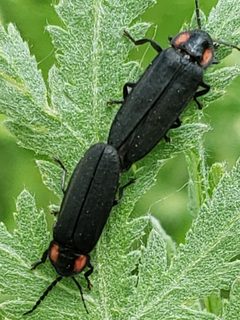
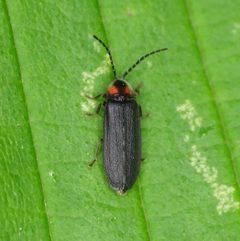
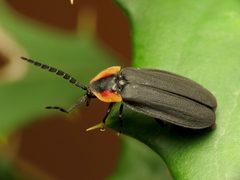
Lucidotini is the largest tribe of fireflies (Lampyridae), comprising approximately 34 and 849 —nearly one-third of all described firefly species worldwide. The tribe is taxonomically challenging due to overlapping diagnostic features across taxonomic levels and historical reliance on homoplastic morphological characters. Recent phylogenetic studies incorporating terminalia and genital traits have substantially improved genus-level delimitations within the group.
Pronunciation
How to pronounce Lucidotini: /ˌluːsɪˈdoʊtɪnaɪ/
These audio files are automatically generated. While they are not always 100% accurate, they are a good starting point.
Identification
Identification of Lucidotini requires examination of terminalia and genital traits; external alone is insufficient due to of body form. The 'Scissicauda lineage' within Lucidotini is characterized by three synapomorphies: well-sclerotized anteriorly notched submentum; plate of phallus broadly to parameres; and syntergite medially split. Male abdominal segment VIII length relative to segment VII has been used as a diagnostic feature in some genera, though this trait has evolved convergently in Haplocauda and Scissicauda.
Images
Habitat
Primarily Neotropical, with highest diversity in the Amazon basin including Amazon Rainforest. Specific microhabitat preferences within forest are not well documented.
Distribution
Neotropics, centered in the Amazon basin of Brazil. Specimens documented from institutional collections including INPA (Manaus), CEMT, DZRJ, MZUSP (São Paulo), MPEG (Belém), and DZUP.
Behavior
Sympatry between congeneric Haplocauda has been documented, representing the first report of such overlap within this . Male abdominal modifications—specifically augmented segment VIII and modified —are hypothesized to function as copulation clamps during mating, though the precise behavioral mechanism remains unobserved.
Similar Taxa
- Other Lampyrinae tribesLucidotini is distinguished from related tribes by combinations of genital characters including phallus structure and female internal genitalia features (large -digesting gland, lump-like spermatheca, bursa copulatrix with paired elongated weakly sclerotized plates, and very long accessory gland).
- ScissicaudaHistorically confused with Haplocauda due to shared augmented abdominal segment VIII; now recognized as rather than shared ancestry, with distinct genital and submental characters.
Sources and further reading
- BugGuide
- iNaturalist taxon
- Catalogue of Life
- Four New Species of Haplocauda, with Notes on the Evolutionary Convergence of Copulation Clamps in Lucidotini (Coleoptera: Lampyridae: Lampyrinae)
- A new firefly genus from South America, with seven new species, a new combination, and notes on the phylogeny of Lampyrinae: Lucidotini (Coleoptera: Lampyridae).