
Photinus
Laporte, 1833
Rover Fireflies
Species Guides
25- Photinus ardens(Northern Ablaze Flash-train)
- Photinus bivulnerus(Twice-wounded firefly)
- Photinus brimleyi(Sidewinder Firefly)
- Photinus carolinus(Smokies Synchronous Firefly)
- Photinus collustrans(Florida Fishhook)
- Photinus concisus(Short-flash Firefly)
- Photinus consanguineus(double cousin firefly)
- Photinus consimilis(Cattail Flash-train Firefly)
- Photinus cookii(Cook's firefly)
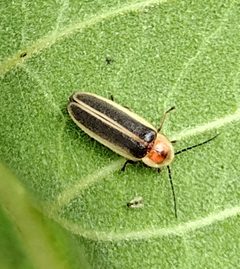
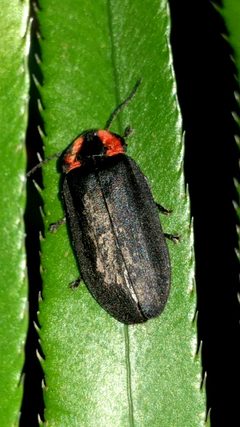
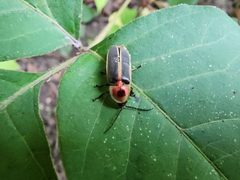
Photinus is a of fireflies ( Lampyridae) commonly known as rover fireflies. These soft-winged beetles are among the most familiar fireflies in North America, with P. pyralis being the most common . Members of this genus produce bioluminescent signals through a chemical reaction involving luciferin and luciferase. Males typically fly and flash characteristic patterns to attract females, which respond from perches in vegetation.
Pronunciation
How to pronounce Photinus: /fəʊˈtaɪnəs/
These audio files are automatically generated. While they are not always 100% accurate, they are a good starting point.
Identification
Photinus can be distinguished from the predatory Photuris by their generally smaller size and different flash patterns. Females of Photuris species mimic Photinus flash patterns to lure and capture males. Species-level identification within Photinus often requires careful observation of flash timing, duration, and pattern, as morphological differences can be subtle. P. pyralis, the common eastern firefly, produces a characteristic J-shaped flash pattern.
Images
Habitat
Photinus fireflies occupy diverse including lawns, meadows, forest edges, and riparian areas. Larvae live in soil and leaf litter. are most active in areas with low vegetation where females can perch and males can fly while signaling. Light pollution has been observed to disrupt their normal courtship .
Distribution
North America, with records from the United States including Vermont and documented observations across the eastern and central regions. The contains the most common firefly in North America.
Seasonality
are active from late spring through summer, with peak activity in June and July in temperate regions. Activity typically begins at dusk and continues into the night, with timing varying by and location.
Diet
Larvae are predatory, feeding on snails, slugs, worms, and other soft-bodied soil . diet is not well documented; adults may feed little or not at all.
Life Cycle
Complete with , larva, pupa, and stages. Larvae are bioluminescent and known as glowworms. Larval stage lasts one to two years. Adults are short-lived, typically surviving only a few weeks to mate.
Behavior
Males fly and emit -specific flash patterns to attract females. Females remain stationary on vegetation and respond with their own flashes. Males provide a of protein to females during mating, which females use to provision . Some Photinus species exhibit synchronous flashing , with flashing in unison.
Ecological Role
Human Relevance
Popular cultural icons and subjects of citizen science monitoring. declines have been documented and attributed to light pollution, destruction, and lawn use. Synchronous such as P. carolinus support nature tourism in Pennsylvania and Tennessee.
Similar Taxa
More Details
Chemical Defense
Photinus fireflies produce lucibufagins, steroidal pyrones related to toad toxins that repel such as spiders and birds. These compounds are sequestered by predatory Photuris females when they consume Photinus males.
Light Pollution Impact
Research has demonstrated that artificial light disrupts Photinus courtship and reduces mating success, potentially contributing to declines in urbanized areas.
Sources and further reading
- BugGuide
- Wikipedia
- GBIF taxonomy match
- iNaturalist taxon
- NCBI Taxonomy
- Catalogue of Life
- Bug Eric: Firefly Tag
- Mother Nature's Fireworks - Lightning bugs, Lampyridae — Bug of the Week
- Summer nights and Lucifer’s lights – Lightning bugs, Lampyridae — Bug of the Week
- Mother Nature’s summer light show: Lightning bugs, Lampyridae — Bug of the Week
- Just in time for the 4th of July: Firefly fireworks - Lampyridae — Bug of the Week
- Synchronous Fireflies in Pennsylvania are Rare and Unusual