
Lanelater
Arnett, 1952
Species Guides
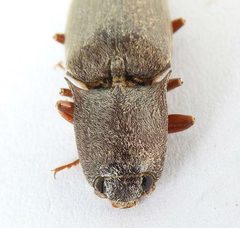
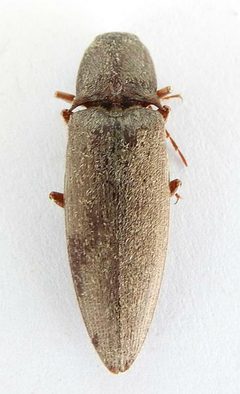
3Lanelater is a of click beetles ( Elateridae, Agrypninae) established by Arnett in 1952. The genus includes at least 10 described distributed across tropical and subtropical regions. Species have been documented in India, Pakistan, and other regions, with some species such as Lanelater fuscipes recognized as significant agricultural pests whose larvae (wireworms) damage field crops by feeding on below-ground plant structures. A new species, Lanelater majeednsis, was recently described from Khairpur district, Sindh, Pakistan.
Pronunciation
How to pronounce Lanelater: /ˈlæ.nɛˌleɪ.tər/
These audio files are automatically generated. While they are not always 100% accurate, they are a good starting point.
Identification
Lanelater can be distinguished from other click beetle using diagnostic morphological characters including features of the male . A diagnostic key to the 10 recognized species has been published. Specific identification characters for the genus include structural features visible under stereo microscopy, though detailed morphological descriptions require examination of and original species descriptions.
Images
Habitat
Agricultural fields, forested areas, disturbed , cultivated fields, grasslands, semi-desert zones, and riparian corridors. Larvae are soil-dwelling. have been observed under organic material during daylight hours.
Distribution
Northern Karnataka, India; Khairpur district, Sindh, Pakistan; documented occurrence in Sindh province represents a range expansion for the in Pakistan. The genus has been reported to be spreading to neighboring areas in India based on 2020-2021 survey data.
Diet
Larvae feed on germinating seeds, roots, stems, tubers, and other below-ground plant structures. are and have been reported as nectarivores, pollen feeders, and some are phytophagous.
Host Associations
- maize - larval higher at seedling stage
- groundnut - larval damage at germination and pod-filling stages
- sugarcane - larval damage at germination stage
- ginger - larval higher during vegetative stage
- onion - larval higher during vegetative stage
- potato - larval from literature citation
- wheat - larval from literature citation
- sorghum - larval from literature citation
- chilli - larval from literature citation
- sugar beet - larval from literature citation
- carrot - larval from literature citation
- soft roots - larval general category from literature
Life Cycle
Complete with , larval, pupal, and stages. Larvae are the damaging stage, commonly called wireworms. Adults are click beetles capable of the characteristic clicking/jumping mechanism using the prosternal spine and mesosternal notch.
Behavior
are and hide under organic material during daylight. Larvae feed by chewing or drilling into below-ground plant structures. When disturbed, adults exhibit (playing dead) with legs and appressed to the body. The clicking mechanism allows adults to launch themselves into the air to escape or right themselves when on their backs.
Ecological Role
Agricultural pest causing significant crop damage; larval feeding creates entry points for bacterial and fungal , leading to secondary . Damage results in uneven plant stands, excessive tillering, wilting, stunting, delayed maturation, and seedling death. Reduced crop quality and quantity allows weed competition due to uneven plant stands. The may play a role in local agro-, though specific ecological functions beyond pest status remain understudied.
Human Relevance
Significant agricultural pest in India and potentially Pakistan. Lanelater fuscipes has been reported causing 20.93-37.16 percent across multiple field crops in Northern Karnataka, India, with documented spread to neighboring areas during 2020-2021. Damage to seeds, roots, stems, and tubers reduces crop yields and quality. Control measures are needed to prevent economic losses in affected regions.
Similar Taxa
- AlausBoth are large click beetles with prominent spots on the pronotum; Alaus oculatus is a well-known North American with similar defensive clicking and
- AgriotesAnother -producing in Elateridae; larvae are economically important agricultural pests with similar soil-dwelling, root-feeding habits
- AeolusClick beetle with similar general ; have been historically confused or grouped with related genera in taxonomic revisions
More Details
Taxonomic history
The was established by Arnett in 1952. A new Lanelater majeednsis was described in 2024 from Khairpur, Sindh, Pakistan, expanding the known geographic range of the genus in Pakistan.
Pest status documentation
The first report of Lanelater fuscipes as a pest in India was published in 2024, documenting its occurrence in Northern Karnataka and its spread to neighboring areas during a 2020-2021 survey period.
Research needs
Authors have recommended future work including molecular analysis, surveys in additional , and assessment of conservation and agricultural significance for this in Pakistan and surrounding regions.
Sources and further reading
- BugGuide
- Wikipedia
- GBIF taxonomy match
- iNaturalist taxon
- NCBI Taxonomy
- Elateridae | Beetles In The Bush
- First report of the occurrence of wireworm (Lanelater fuscipes) (Fabricius) as a pest in different field crops in India
- Comparative Study of the New Species of Genus <i>Lanelater </i>Arnett 1952 (Coleoptera: Elateridae: Agrypninae) from Different Regions of Khairpur Sindh, Pakistan