
Aeolus
Eschscholtz, 1829
click beetles
Species Guides
10- Aeolus amabilis
- Aeolus asper
- Aeolus cribratus(Click beetle)
- Aeolus lepidus(click beetle)
- Aeolus livens
- Aeolus mellillus(Sweet Click Beetle)
- Aeolus nigriventris
- Aeolus scutellatus
- Aeolus subornatus
Aeolus is a of click beetles ( Elateridae) comprising over 220 described distributed worldwide. Members of this genus possess the characteristic elaterid body plan with a prosternal process that engages with a mesosternal cavity, enabling the 'clicking' mechanism used to right themselves when overturned. The genus was established by Eschscholtz in 1829 and is currently classified within the Agrypninae and tribe Oophorini.
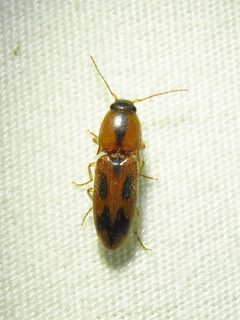
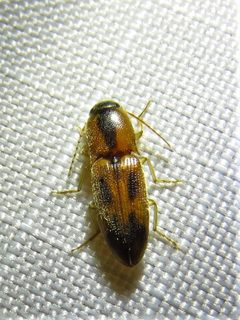
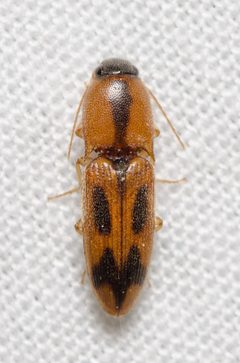
Pronunciation
How to pronounce Aeolus: /ˈaɪ.ə.ləs/
These audio files are automatically generated. While they are not always 100% accurate, they are a good starting point.
Identification
Distinguishing Aeolus from other elaterid requires examination of the prosternal process, antennal structure, and body proportions. -level identification within Aeolus typically relies on characters of the pronotum, elytral , and male genitalia. The genus may be confused with other Agrypninae genera such as Agrypnus or Lacon, which share similar body forms but differ in details of the prosternal , tarsal structure, and patterns.
Images
Distribution
Worldwide distribution with records from North America (including Vermont, USA), and other regions. Specific distribution patterns at the level are poorly documented in available sources.
Behavior
exhibit the characteristic click beetle defensive : when placed on their backs, they use the prosternal spine to strike the mesosternal cavity, producing an audible click and propelling themselves into the air to right themselves.
Similar Taxa
- AgrypnusBoth are large-bodied Agrypninae with similar overall form; Agrypnus typically has more pronounced pronotal and different prosternal configuration.
- LaconShares Agrypninae and general body plan; Lacon often differ in antennal serration and elytral sculpturing.
Sources and further reading
- BugGuide
- Wikipedia
- GBIF taxonomy match
- iNaturalist taxon
- NCBI Taxonomy
- Catalogue of Life
- ID Challenge #6 | Beetles In The Bush
- Presenting lidar surface returns as Aeolus product with the outlook on future spaceborne lidar missions including EarthCARE and Aeolus-2 
- How sensitive are Aeolus Lidar Surface Returns (LSR) to the types of surface? Insights for LSR-based retrieval of AOD over ocean by using Aeolus.
- The impact of using assimilated Aeolus wind data on regional WRF-Chem dust simulations
- Rapid Aeolus L2B HLOS Wind Retrieval via BP Neural Network.