
Ips borealis
Swaine, J.M., 1911
Northern Engraver Beetle
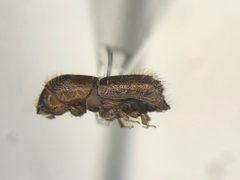
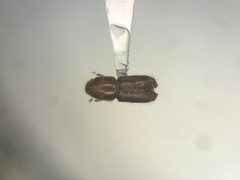
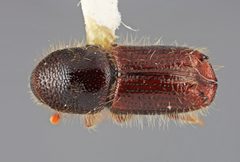
Ips borealis is a bark beetle in the Curculionidae, commonly known as the Northern Engraver . It is found in North America, with records from Canadian provinces including Alberta, British Columbia, Manitoba, and New Brunswick. As a member of the Ips, it belongs to a group of beetles known as engraver beetles that tunnel beneath tree bark, creating distinctive gallery patterns. The species was described by J.M. Swaine in 1911.
Pronunciation
How to pronounce Ips borealis: /ˈɪps bɔːr.iˈæl.ɪs/
These audio files are automatically generated. While they are not always 100% accurate, they are a good starting point.
Images
Distribution
North America. Documented occurrences in Alberta, British Columbia, Manitoba, and New Brunswick, Canada. The specific southern extent of its range within the United States is not well documented in available sources.
Similar Taxa
- Ips grandicollisBoth are congeneric bark beetles in the Ips, sharing the characteristic engraver and bark-boring habits. Ips grandicollis (fivespined engraver) is distinguished by having five spines on each side of the declivity, whereas the spine count and arrangement for I. borealis are not documented in available sources.
- Ips typographusAnother congeneric with similar ecological role as a bark beetle, though I. typographus is primarily Eurasian in distribution and not known from North America, allowing geographic separation where ranges do not overlap.
More Details
Taxonomic Note
The was described by J.M. Swaine in 1911. It is currently accepted as a valid species in the Ips, Curculionidae. The 'Northern Engraver ' reflects both its geographic distribution and its membership in a group of beetles known for the distinctive engraving-like patterns their larvae create beneath tree bark.
Data Limitations
Available sources provide minimal biological information for this . Most detailed ecological and behavioral data in the provided context refer to other species with similar names (Melanoplus borealis, Brunneria borealis, Apocephalus borealis) or congeneric bark beetles such as Ips grandicollis. Direct observations and studies specifically targeting I. borealis appear to be scarce in the accessible literature.
Sources and further reading
- BugGuide
- GBIF taxonomy match
- iNaturalist taxon
- NCBI Taxonomy
- Catalogue of Life
- Bugs for All, All for Bugs | Bug Squad
- Grasshoppers of Wyoming and the West
- Did One Praying Mantis Give Rise to an All-Female Species?
- Unhappy Christmas tree - Fivespined engraver, Ips grandicollis — Bug of the Week
- Zombie bees, Apis mellifera, and their tormentor the humpbacked fly, Apocephalus borealis — Bug of the Week
- A thrips is a thrips… | Beetles In The Bush