
Larinus carlinae
(Olivier, A.G., 1807)
Canada thistle bud weevil, thistle bud weevil, Canada thistle stem weevil
A small weevil native to Europe and western Asia introduced to North America as a agent for thistles. emerge in spring and feed on developing thistle buds with their elongated snouts. Females drill into flower buds to deposit ; larvae hatch and consume reproductive tissues, destroying seeds and preventing plant . can reduce target thistle by 90% or more within a decade of establishment. The species has been observed feeding on native North American thistles, raising conservation concerns for species.
Pronunciation
How to pronounce Larinus carlinae: /ˈlaː.rɪ.nus karˈlɪ.ne/
These audio files are automatically generated. While they are not always 100% accurate, they are a good starting point.
Identification
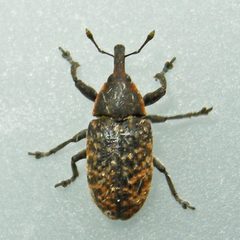
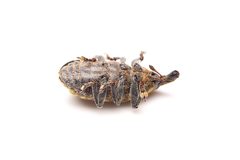
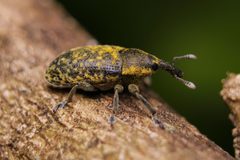
Distinguished from the similar thistle head weevil (Rhinocyllus conicus) by its proportionally longer rostrum (snout). are small beetles with elongated snouts bearing tiny chewing mouthparts at the tip. Body coloration typically blends with plant foliage. Larvae are white, legless, and C-shaped, found within thistle flower buds.
Images
Habitat
Associated with thistle-infested areas including agricultural lands, meadows, roadsides, and disturbed where thistles (particularly Cirsium arvense, Canada thistle) grow.
Distribution
Native to Europe and western Asia. Introduced to North America: first detected in Maugansville, Maryland in 1971, with establishment likely in the 1960s. Now present across much of the United States and Canada where thistles occur. GBIF records confirm presence in Belgium and Denmark.
Seasonality
emerge in spring when thistle plants begin developing flower buds. Activity continues through the growing season while plants remain in bud and flower. One per year with adults .
Diet
Specialized herbivore feeding on thistles (Asteraceae: Cardueae). feed on developing thistle buds and leaves. Larvae feed exclusively on reproductive tissues within flower buds, consuming developing seeds and floral structures.
Host Associations
- Cirsium arvense - primary Canada thistle, main target for
- Carduus acanthoides - spiny plumeless thistle
- Cirsium discolor - native thistle, conservation concern
- Cirsium altissimum - native thistle, conservation concern
Life Cycle
One-year . emerge in spring, feed on thistle vegetation, and mate. Females use elongated rostrum to drill holes into developing flower buds and deposit single . Larvae hatch and bore through flower , consuming reproductive tissues and preventing seed production. Larval development occurs within buds; presumably occurs in soil or within plant material. Adults overwinter.
Behavior
feed on thistle buds and leaves, causing defoliation and reduced plant vigor. When depositing , females drill precisely into flower buds using rostrum. Larval feeding destroys the reproductive capacity of infested flower . Adults capable of and to new thistle patches.
Ecological Role
agent for thistles, reducing plant competitive ability and seed production. However, documented feeding on native North American thistles creates ecological conflict, potentially threatening and dependent on native thistles.
Human Relevance
Introduced deliberately for of agricultural weeds, particularly Canada thistle. Reduces thistle in pastures and agricultural lands, decreasing economic losses. Conservation concern due to non-target impacts on native thistles; USDA cancelled interstate movement permits in 2000.
Similar Taxa
- Rhinocyllus conicusSimilar size, , and use; distinguished by shorter rostrum and different -laying (eggs deposited on bracts and leaves rather than drilled into buds)
- Larinus planusFormerly considered or closely related; now generally treated as distinct with similar and range
Sources and further reading
- BugGuide
- GBIF taxonomy match
- iNaturalist taxon
- NCBI Taxonomy
- Catalogue of Life
- Eaters of thistles: Thistle tortoise beetle, Cassida rubiginosa, and Canada thistle bud weevil, Larinus planus — Bug of the Week
- Archive — Bug of the Week
- Dr. Jekyll and Mr. Hyde wage war on thistles: Thistle head weevils, Rhinocyllus conicus — Bug of the Week