
Dryophthorinae
Tribe Guides
4- Dryophthorini
- Orthognathini
- Rhinostomus(yucca weevils)
- Rhynchophorini
Dryophthorinae is a of weevils (Curculionidae) comprising approximately 1,200 in 153 and ten tribes. The subfamily includes numerous economically significant agricultural pests, particularly of palms, bananas, rice, maize, sugarcane, and bromeliads. Many species are distributed in tropical and subtropical regions worldwide, with several having achieved global distributions through international trade in ornamental and agricultural plants. The taxonomic status of Dryophthorinae remains contested; while traditionally treated as a subfamily, at least one major revision has elevated it to rank as Dryophthoridae.
Pronunciation
How to pronounce Dryophthorinae: /draɪ.ɑfˈθɔr.ɪ.ni/
These audio files are automatically generated. While they are not always 100% accurate, they are a good starting point.
Identification
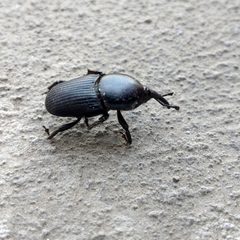
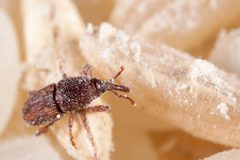
Dryophthorinae is distinguished from other curculionid by a combination of morphological characters, though specific diagnostic features vary among constituent tribes. Members typically exhibit the elongated rostrum characteristic of weevils, with variation in rostral length and curvature across tribes. The subfamily includes groups with diverse body forms, from the robust palm weevils (Rhynchophorini) to the more slender billbugs (Sphenophorini).
Images
Habitat
Tropical and subtropical regions globally; encompasses diverse including native forests, agricultural landscapes, and peri-urban areas. Specific habitat associations vary by tribe and : palm-associated occur in coconut and date palm plantations, banana plantations, and native palm forests; turfgrass-associated taxa (Sphenophorini) inhabit lawns and golf courses; bromeliad-associated species occur in forest and ornamental plantings; bamboo-associated taxa occupy forested areas with bamboo understory.
Distribution
Global distribution with concentration in tropical and subtropical regions; numerous have achieved intercontinental distributions through human-mediated . Native ranges span the Neotropics, Afrotropics, Oriental region, and Australasia. Established occur in Europe, North America, and Pacific islands through accidental introduction. Specific documented distributions include: Brazil (first records of Diocalandra frumenti and Polytus mellerborgii in Pernambuco state); Colombia (Dynamis borassi in Buenaventura); Cuba (Allaeotes niger, only New World record of Stromboscerini); Cyprus (Sphenophorus placidus vestitus); China (multiple Stromboscerini species); Rica (Eucalandra alas).
Diet
Larvae of many feed internally within plant tissues, creating galleries in stems, roots, rhizomes, or inflorescences. feed on plant tissues including leaf rachis, roots, petioles, inflorescences, fronds, leaf , and fruits. Specific feeding documented: Diocalandra frumenti attacks at least 17 of Arecaceae; Polytus mellerborgii feeds on banana rhizomes and pseudostems; Sphenophorus parvulus larvae are root feeders on Kentucky bluegrass; Dynamis borassi associates with native palms including Oenocarpus bataua; Eucalandra species associate with bamboos.
Life Cycle
patterns vary among tribes and . Internal feeding is common: larvae develop within plant tissues, with laid in crevices, wounds, or decaying tissues. Diocalandra frumenti: eggs hatch in 4–9 days, larval development 8–10 weeks, 10–12 days. Polytus mellerborgii: complete life cycle inside banana rhizomes and pseudostems. Sphenophorus parvulus: eggs laid in grass stems, larvae develop as root feeders, pupation in soil, may overwinter. Rhynchophorus ferrugineus: larval feeding damages palm and/or stipe meristem, often causing tree death.
Behavior
Primarily activity documented in several (e.g., Polytus mellerborgii). Cryptic lifestyle with internal feeding makes detection difficult for many species. of some species active seasonally. present in some : Polytus mellerborgii males possess large pygidial plate near ventrites III–V projected downward, females with smaller plate projected forward. Severe attacks by palm-feeding species can kill trees within 6–8 months.
Ecological Role
Agricultural pests causing significant economic damage to crop production globally. Larval gallery formation weakens plants and promotes secondary microbial and other pest invasions. Threats to native documented: deforestation of native palms induces host-shifting to cultivated (e.g., peach palm Bactris gasipaes in Colombia). Endosymbiotic associations documented: Metamasius hemipterus harbors "Candidatus Nardonella dryophthoridicola." efforts include use of parasitic and (Anaphes calendrae) against turfgrass pests.
Human Relevance
Major economic impact on global agriculture through damage to palm, banana, rice, maize, sugarcane, and bromeliad production. Several are subjects of concern and phytosanitary surveillance: Diocalandra frumenti and Polytus mellerborgii in Brazil; Rhynchophorus ferrugineus (red palm weevil) across 50 countries. Management strategies include chemical control (, ), , and use of endophytic grass varieties. Some species threaten native and endangered flora: Mexican bromeliad weevil (Metamasius callizona) attacks threatened native bromeliads in Florida.
Similar Taxa
- Other Curculionidae subfamiliesDryophthorinae is distinguished by morphological characters and larval development primarily within plant tissues; other such as Curculioninae and Molytinae typically exhibit more external feeding habits and different rostral structure.
- Brachycerinae (if treated as separate)Historical taxonomic confusion; some treatments have merged or separated these groups based on rostral and genitalic characters, but current consensus maintains Dryophthorinae as distinct with different larval .
Sources and further reading
- BugGuide
- Wikipedia
- iNaturalist taxon
- NCBI Taxonomy
- Bluegrass Billbug Sphenophorus parvulus Gyllenhal (Insecta: Coleoptera: Curculionidae: Dryophthorinae)
- First Records of Two Invasive Weevils (Coleoptera, Curculionidae, Dryophthorinae) in Brazil with Quarantine Potential
- A review of the Neotropical genus Eucalandra Faust, 1899 (Coleoptera; Curculionidae: Dryophthorinae)
- First record of Sphenophorus placidus vestitus (Coleoptera: Curculionidae: Dryophthorinae) in Cyprus
- A review of the Neotropical genus Alloscolytroproctus Hustache, 1929 (Coleoptera; Curculionidae: Dryophthorinae)
- Florida Bromeliad Weevil (no official common name), Metamasius mosieri Barber (Insecta: Coleoptera: Curculionidae: Dryophthorinae)
- Laboratory Evaluation of Boric Acid and Azadirachtin in combating Rhynchophorus ferrugineus (Coleoptera: Curculionidae: Dryophthorinae)
- Four new species of the genus Tasactes Faust, 1894 (Coleoptera, Curculionidae, Dryophthorinae) from China
- Allaeotes niger, a weevil introduced to Cuba and the only known New World Stromboscerini (Coleoptera: Curculionidae: Dryophthorinae)
- Descriptions of the Immature Stages of Poteriophorus Schoenherr, 1838 (Coleoptera: Curculionidae: Dryophthorinae): Larva, Pupa, and Biology of Poteriophorus uhlemanni (Schultze, 1922) Discovered through Dawu Traditional Ecological Knowledge
- Draft Genome Sequence of “ Candidatus Nardonella dryophthoridicola” Strain NARMHE1, Endosymbiont of Metamasius hemipterus (Coleoptera, Curculionidae, Dryophthorinae)
- The Weevil Dynamis Borassi (Coleoptera: Curculionidae: Dryophthorinae) Associated With Native Palms In Forests And Disturbed Areas In Buenaventura, Colombia
- Knowing what is “known”: biology, distribution and habitat suitability of the bearded weevil Rhinostomus barbirostris (Curculionidae: Dryophthorinae) in Mexico
- Four New Species and One New Record of Stromboscerini (Coleoptera, Curculionidae, Dryophthorinae) from China.