
Dysmerus
Casey, 1884
Species Guides
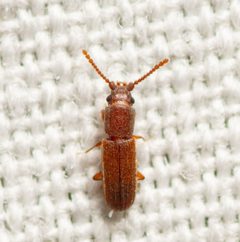
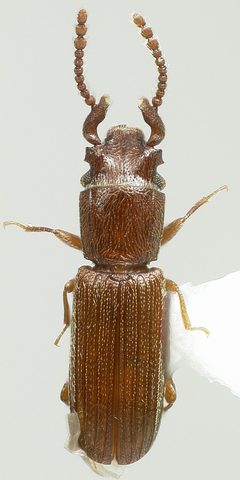
1Dysmerus is a of small beetles in the Laemophloeidae, comprising 15 distributed across the New World from the southeastern United States to Bolivia and the West Indies. The genus remained for over a century until a 2025 revision resurrected two synonymized species and described 12 new species. Males possess a grotesquely modified antennal scape of unknown function, a diagnostic feature of the genus. These beetles are rarely encountered, though occasionally come to light at night.
Pronunciation
How to pronounce Dysmerus: //dɪsˈmɛrʊs//
These audio files are automatically generated. While they are not always 100% accurate, they are a good starting point.
Identification
Distinguished from other Laemophloeidae by the lateral insertion of the antennal on the scape (rather than terminal) and, in males, the grotesquely modified scape. The combination of closed procoxal cavities, narrow intercoxal process of the first ventrite, and absence of a clypeal further supports identification. The small size (~2 mm) and subcylindrical, pubescent body form are consistent with the but not unique to it.
Images
Habitat
Associated with the burrows of bark beetles (Curculionidae: Scolytinae) in woody substrates. Specific microhabitat preferences beyond this association remain poorly documented due to infrequent collection.
Distribution
New World distribution ranging from the southeastern United States south to Bolivia, including the West Indies. The is restricted to this region.
Seasonality
have been observed at night, suggesting activity. Specific seasonal patterns are undocumented due to rarity of collection.
Host Associations
- Bark beetles (Curculionidae: Scolytinae) - Found in burrows of; possibly predacious uponSpecific not identified
Life Cycle
Larvae possess with an acute basal tooth in place of the usual grinding mola, a modification that may indicate predatory feeding. Complete larval description is not available.
Behavior
are rarely collected but have been observed coming to light at night. The function of the modified male antennal scape is unknown. Association with bark beetle burrows suggests possible predatory .
Ecological Role
Potential of bark beetles (Scolytinae) based on mandibular of larvae and occurrence in burrows, though this relationship requires confirmation.
Human Relevance
No documented economic or medical significance. Rarity of collection limits assessment of potential impact on forestry or agriculture.
Similar Taxa
- Other Laemophloeidae generaDistinguished by the lateral insertion of the antennal and, in males, the grotesquely modified scape; most other laemophloeids have terminally inserted pedicels and unmodified scapes in both sexes
More Details
Taxonomic history
The remained (containing only D. basalis) from its description in the late 19th century until 2025, when a revision by Bento and Thomas resurrected D. caseyi and D. sulcicollis from synonymy and described 12 new , bringing the total to 15 species.
Mystery of male antennal modification
The function of the grotesquely modified male antennal scape remains unknown. It may play a role in male-male competition, courtship, or sensory function, but no hypothesis has been tested.
Collection rarity
Despite the now containing 15 , Dysmerus remains among the most rarely collected laemophloeid genera. This rarity may reflect genuine scarcity, cryptic habits within bark beetle galleries, or both.