
Cybocephalus
Erichson, 1844
Species Guides
4Cybocephalus is a of small beetles in the Cybocephalidae, comprising over 200 described . Members are specialized of scale insects (Coccoidea), particularly diaspidids (armored scales) and other Hemiptera. The genus has been widely studied for applications against agricultural and horticultural pests. Species occur across multiple continents with documented distributions in Asia, Australia, Europe, North America, and the Middle East.
Pronunciation
How to pronounce Cybocephalus: /ˌsaɪboʊˈsɛfələs/
These audio files are automatically generated. While they are not always 100% accurate, they are a good starting point.
Identification
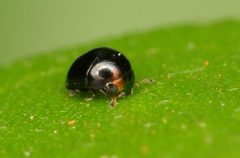
Cybocephalus are small, compact beetles typically under 5 mm in length. They are distinguished from other nitiduloid beetles by their association with scale insects and predatory habits. Specific identification to species level requires examination of genitalia and other fine morphological characters; coloration of the and pronotum provides useful diagnostic features for some species.
Images
Habitat
are defined by presence of scale insects on plants. have been collected from citrus orchards, fig plantations, cycads, and various woody plants infested with Coccoidea. The beetles occupy the microhabitat of insect colonies on leaves, stems, and fruit surfaces.
Distribution
Documented from China, Taiwan, Japan, Iran, Australia (New South Wales, South Australia), Europe (Romania, Scandinavia, Denmark, Norway, Sweden), and Puerto Rico. Distribution is expanding through intentional introduction for and natural spread.
Seasonality
In southern New South Wales, Cybocephalus aleyrodiphagus overwinters as non-reproductive and produces two adult during December-January and March-May. Seasonal activity corresponds with prey abundance cycles.
Diet
Specialized of scale insects (Coccoidea). Documented prey includes: Orchamoplatus citri (Australian citrus whitefly), Aulacaspis yasumatsui (cycad aulacaspis scale), Aonidiella orientalis (oriental ), Unaspis euonymi (euonymus scale), and various diaspine coccids. and larvae feed on , , nymphs, and pupae of scales.
Host Associations
- Orchamoplatus citri - -preyAustralian citrus whitefly; major natural enemy in southern New South Wales
- Aulacaspis yasumatsui - -preycycad aulacaspis scale; evaluated for
- Aonidiella orientalis - -preyoriental on Citrus
- Unaspis euonymi - -preyeuonymus scale
- Ceroplastes rusci - -preyfig wax scale on Ficus carica
Life Cycle
are laid singly near egg circles of scale insects. Larvae feed on eggs, , and nymphs. occurs within or near scale colonies. Development includes egg, larval, pupal, and stages. In at least one , occurs as non-reproductive adults with multiple per year.
Behavior
Females deposit in proximity to insect colonies to ensure larval access to prey. actively forage on scale-infested plant surfaces. Reproductive females may produce ; C. aleyrodiphagus females contain elevated stearic, oleic, and linoleic acids compared to males and non-reproductive females. abundance tracks prey , indicating functional response.
Ecological Role
natural enemies of scale insects in agricultural and natural . Function as agents that suppress pest . pressure on scale insects can reduce economic damage to crops including citrus, fig, and ornamental plants.
Human Relevance
Widely recognized as valuable agents. have been intentionally distributed for control of scale insects including cycad aulacaspis scale and euonymus scale. Conservation of natural supports in citrus and other cropping systems.
Similar Taxa
- RhyzobiusAlso contains scale-feeding lady beetles (Coccinellidae); distinguished by placement (Cybocephalidae vs. Coccinellidae) and different antennal and tarsal
- ChilocorusCoccinellid of scale insects; larger size, different body shape, and elytral color patterns distinguish them from Cybocephalus
More Details
Taxonomic History
Previously classified in Cybocephalinae of Nitidulidae; now placed in separate family Cybocephalidae based on phylogenetic studies. This reclassification reflects their specialized and distinct from sap-feeding nitidulids.
Sex Ratio Variation
C. aleyrodiphagus exhibits seasonal sex ratio shifts: approximately 1:1 in October-December (overwintered ) but male-biased at 2.2:1 in January-July (new adults).
Chemical Ecology
Evidence for production in females based on profiles; reproductive females contain greater quantities of specific fatty acids than males, suggesting -mediated mate location.
Sources and further reading
- BugGuide
- Wikipedia
- GBIF taxonomy match
- iNaturalist taxon
- NCBI Taxonomy
- Catalogue of Life
- A New Species of Cybocephalus (Coleoptera: Cybocephalidae) from Taiwan and a New Distribution Record for Cybocephalus nipponicus
- Host range of Cybocephalus flavocapitis and Cybocephalus nipponicus, two potential biological control agents for the cycad aulacaspis scale, Aulacaspis yasumatsui
- A New Host for Cybocephalus sp., a Predator of Diaspine Coccidae
- First record of Cybocephalus nipponicus (Coleoptera, Cybocephalidae) in Romania
- Checklist of the genus Cybocephalus Erichson (Coleoptera: Cybocephalidae) of China, with description of a new species from Yunnan Province
- A new species of the genus Cybocephalus (Coleoptera: Nitidulidae) with light head and pronotum from Iran
- Biology of Cybocephalus sp. nr. nipponicus (Coleoptera: Cybocephalidae), a Natural Enemy of Euonymus Scale (Homoptera: Diaspididae)
- A new species of the genus Cybocephalus from Iran and a note on synonymy (Coleoptera: Nitidulidae)
- New distribution record of Cybocephalus kathrynae (Coleoptera, Cybocephalidae) on Mona Island, Puerto Rico
- Description and Biology of A New Species of Cybocephalus Erichson (Coleoptera: Nitidulidae), A Predator of Australian Citrus Whitefly