
Nephus
Mulsant, 1846
Species Guides
12- Nephus alyssae
- Nephus atramentarius(dusky lady beetle)
- Nephus binaevatus(Dusky Lady Beetle)
- Nephus bivulnerus(dusky lady beetle)
- Nephus flavifrons(yellow-fronted lady beetle)
- Nephus georgei(George's lady beetle)
- Nephus guttulatus(dusky lady beetle)
- Nephus intrusus
- Nephus ornatus(ornate lady beetle)
Nephus is a of small lady beetles in the Coccinellidae, Scymninae. The genus contains more than 25 described . Several former species have been transferred to the genus Scymnobius. Members of this genus are known as specialized of mealybugs and have been investigated for of these pests.
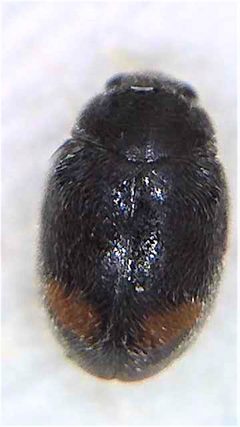
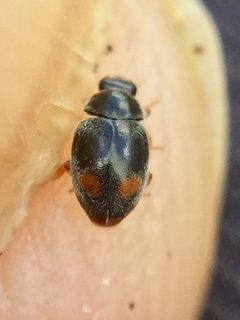
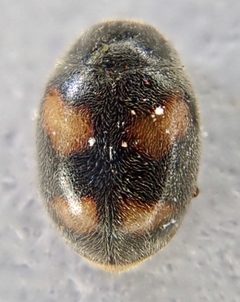
Pronunciation
How to pronounce Nephus: /ˈne.fus/
These audio files are automatically generated. While they are not always 100% accurate, they are a good starting point.
Identification
Nephus are small coccinellids in the Scymninae. Distinction from other Scymninae , particularly Scymnobius (which now contains several former Nephus species), requires examination of morphological characters. Specific identification criteria for the genus are not documented in available sources.
Images
Distribution
Records indicate presence in Europe (Denmark, Norway, Sweden), North America (Vermont, USA), and the Afrotropical region (Reunion Island, Canary Islands, northern Algeria, Cape Verde). Nephus incisus occurs across the Palaearctic and Afrotropical regions.
Diet
Specialized of mealybugs (Pseudococcidae). Nephus reunioni preys on mealybugs generally; Nephus regularis has been documented feeding on Phenacoccus madeirensis.
Host Associations
- mealybugs (Pseudococcidae) - preyPrimary food source; includes Phenacoccus madeirensis
Life Cycle
Development in Nephus reunioni occurs optimally at 24-25°C, with highest survival at preimaginal stages, longevity, and reproductive capacity at this temperature. growth rate peaks at 29°C.
Behavior
Nephus reunioni exhibits ecological plasticity, tolerating a wide range of relative humidity conditions (optimum 55±5%).
Ecological Role
of mealybugs; investigated as agent for mealybug pest management. Nephus reunioni has been evaluated as having broader potential for biological control than Cryptolaemus montrouzieri due to its ecological plasticity.
Human Relevance
Investigated for of mealybug pests. Nephus reunioni was imported from Reunion Island as a biocontrol agent. Nephus regularis has been studied for control of the mealybug Phenacoccus madeirensis.
Similar Taxa
- ScymnobiusSeveral former Nephus have been transferred to this ; historical taxonomic confusion exists between these genera
- Cryptolaemus montrouzieriAnother mealybug used in ; Nephus reunioni has been compared to this as having broader biocontrol potential
More Details
Taxonomic note
The has undergone taxonomic revision, with several moved to Scymnobius. The genus name has also been used in combination, as Scymnus (Nephus) reunioni.
Species count
More than 25 described are currently recognized in Nephus.
Sources and further reading
- BugGuide
- Wikipedia
- GBIF taxonomy match
- iNaturalist taxon
- NCBI Taxonomy
- Catalogue of Life
- Complementary data on the distribution of Nephus (Nephus) incisus (Har. Lindberg, 1950) (Coleoptera: Coccinellidae) in the Palaearctic and Afrotropical regions
- Life history of the importedScymnus (Nephus) Reunioni [Col.: Coccinellidae] predator of mealybugs
- Biology of Nephus regularis (Sicard) on The Invasive Mealybug, Phenacoccus madeirensis (Green) (Hemiptera: Pseudococcidae)