
Epilachna tredecimnotata
(Latreille, 1833)
Southern Squash Lady Beetle
Epilachna tredecimnotata is a phytophagous lady beetle in the Coccinellidae, commonly known as the southern squash lady beetle. measure 6.75–10 mm in length and are distinguished from related by their relatively small elytral spots. The species occurs across the Caribbean, Central America, South America, and southwestern North America (western Texas to Arizona). Like other members of the Epilachna, it feeds on plant material rather than other insects.
Pronunciation
How to pronounce Epilachna tredecimnotata: /ˌɛpɪˈlæknə trɛˌdɛsɪmnoʊˈteɪtə/
These audio files are automatically generated. While they are not always 100% accurate, they are a good starting point.
Identification
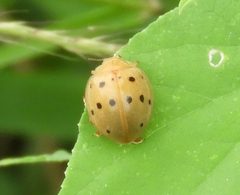
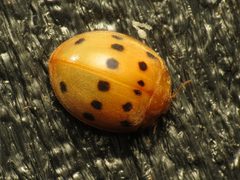
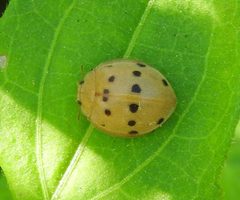
Distinguished from Epilachna borealis (squash lady beetle) by the smaller size of the spots on the . The two are otherwise similar in general appearance and size range.
Images
Appearance
are 6.75–10 mm in length. The bear spots that are notably smaller than those of the closely related Epilachna borealis. The overall body form is typical of lady beetles, with a convex, rounded shape.
Distribution
Caribbean Sea, Central America, South America, and North America (western Texas to Arizona).
Diet
Phytophagous; feeds on plant material. Specific plants have not been documented in the available sources, though are associated with cucurbits and other crops.
Behavior
Has been observed in feeding trenches shared with Diabrotica porracea (Chrysomelidae), though the specific nature of this interaction requires further study.
Ecological Role
Herbivore; unlike predatory lady beetles, members of this function as plant-feeders in their .
Human Relevance
May impact cucurbit and other crop plants, as is typical for the Epilachna, though specific agricultural damage reports for this are not documented in available sources.
Similar Taxa
- Epilachna borealisVery similar in appearance and size, but distinguished by larger elytral spots
More Details
Taxonomic note
The name 'tredecimnotata' refers to thirteen spots, though the actual spot pattern may vary. The species was described by Latreille in 1833.
Sources and further reading
- BugGuide
- Wikipedia
- GBIF taxonomy match
- iNaturalist taxon
- NCBI Taxonomy
- Catalogue of Life
- Bad lady beetles: Mexican bean beetles, Epilachna varivestis — Bug of the Week
- Lady beetles with a taste for beans: Mexican bean beetles, Epilachna varivestis — Bug of the Week
- Coccinelidae | Beetles In The Bush
- JIPM Article on Mexican Bean Beetles Offers Tips on Controlling These Crop-Damaging Pests
- Sharing the Trench: A Curious Feeding Behavior of Diabrotica porracea Harold (Chrysomelidae: Galerucinae) in the Presence of Epilachna tredecimnotata (Latreille) (Coccinellidae)