
Epilachna borealis
(Fabricius, 1775)
Squash Lady Beetle, Squash beetle
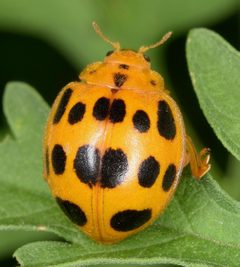
Epilachna borealis, commonly known as the squash lady beetle or squash , is a phytophagous lady beetle native to the eastern United States. Unlike most lady beetles that are predatory, this feeds exclusively on cucurbitaceous plants. and larvae cause significant damage to squash, pumpkins, and related crops by skeletonizing leaves and feeding on fruit rinds. The species is frequently mistaken for beneficial lady beetles or cucumber beetles due to its similar appearance.
Pronunciation
How to pronounce Epilachna borealis: /ɛpɪˈlæknə bɔːriˈælɪs/
These audio files are automatically generated. While they are not always 100% accurate, they are a good starting point.
Identification
Distinguished from predatory lady beetles by its phytophagous habits and association with cucurbit plants. The combination of yellow coloration with seven black spots per and four small spots on the pronotum separates it from most other North American lady beetles. Resembles cucumber beetles ( Chrysomelidae) in general appearance but has the characteristic convex lady beetle body shape. Differs from the (Epilachna varivestis) by plant association and subtle spot pattern differences.
Images
Habitat
Found in agricultural settings, gardens, and natural areas where cucurbitaceous plants grow. Associated with cultivated and wild squash, pumpkins, gourds, and related plants. Requires moist conditions favorable to plant growth.
Distribution
Eastern United States. Records include Vermont and surrounding regions.
Seasonality
Active during spring through fall, with in protected locations. Adults emerge in spring to resume feeding and . Later in the season, adults feed on pumpkin and squash rinds.
Diet
Specialized herbivore feeding on cucurbitaceous plants. Both and larvae consume leaf tissue between , creating skeletonization damage. Adults have been observed feeding on pumpkin and squash rinds later in the growing season.
Host Associations
- Cucurbitaceae - of plants including squash, pumpkins, cucumbers, melons, and gourds
Life Cycle
Females deposit clusters of small yellow on leaf surfaces of plants. Larvae hatch and feed on leaf tissue, creating semi-circular trenches around feeding areas before consuming enclosed tissue. Larvae complete development and pupate, with emerging to continue feeding. Adults overwinter in protected locations and resume activity in spring. Multiple per year likely in favorable climates.
Behavior
and larvae feed by producing a semi-circular trench around their intended feeding area before consuming the enclosed leaf tissue. Gregarious feeding observed, with multiple individuals feeding on same plant. Adults seek shelter in decaying vegetation or leaf litter for .
Ecological Role
Herbivore and agricultural pest. Unlike predatory lady beetles, does not contribute to of other insects. Serves as prey for and .
Human Relevance
Significant agricultural pest of squash, pumpkins, and related crops. Damage includes leaf skeletonization and direct feeding on fruit rinds, reducing yield and marketability. Often mistaken for beneficial lady beetles, leading to delayed management. Control methods include hand removal, , , and using such as Pediobius faveolatus.
Similar Taxa
- Epilachna varivestis is congeneric and shares phytophagous habits, but feeds on legumes rather than cucurbits and has slightly different spot patterns
- Acalymma vittatumStriped cucumber beetle resembles E. borealis in coloration and shares cucurbit , but has more elongated body and different elytral pattern
- Diabrotica undecimpunctata howardiSpotted cucumber beetle has similar spotted appearance but more elongated body shape and different spot arrangement
- Coccinella septempunctataSeven-spotted lady beetle is predatory and beneficial, with similar spot count but red/orange coloration and different spot arrangement; does not damage plants
Misconceptions
Frequently mistaken for beneficial predatory lady beetles due to resemblance, leading to failure to control . Also confused with cucumber beetles (family Chrysomelidae) due to similar coloration and shared plants.
More Details
Taxonomic note
Member of Epilachninae, one of the few lineages of Coccinellidae that evolved herbivory rather than . This subfamily includes several agricultural pests across the Americas.
Defensive secretions
Like other Epilachna , likely produces defensive alkaloidal compounds when disturbed, though this has been more thoroughly documented in E. varivestis.
Sources and further reading
- BugGuide
- Wikipedia
- GBIF taxonomy match
- iNaturalist taxon
- NCBI Taxonomy
- Catalogue of Life
- Coccinelidae | Beetles In The Bush
- Bad lady beetles: Mexican bean beetles, Epilachna varivestis — Bug of the Week
- Lady beetles with a taste for beans: Mexican bean beetles, Epilachna varivestis — Bug of the Week
- Zombie bees, Apis mellifera, and their tormentor the humpbacked fly, Apocephalus borealis — Bug of the Week
- Did One Praying Mantis Give Rise to an All-Female Species?
- Back-Seat Driver: The Parasite That Makes Bees Drop Off Its Babies