
Coelophora
Mulsant, 1850
Species Guides
1- Coelophora inaequalis(variable ladybird)
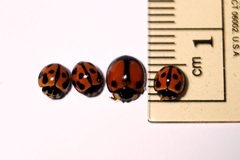
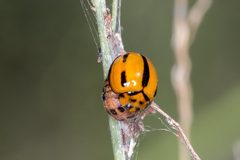
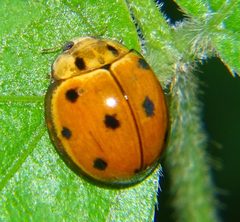
Coelophora is a of ladybird beetles (Coccinellidae) established by Mulsant in 1850, containing approximately 14 described distributed across Asia, Australia, and surrounding regions. Members of this genus are predominantly aphidophagous , with several species studied for their potential as agents in agricultural systems. The genus exhibits notable colour pattern , particularly in Coelophora inaequalis, where multiple elytral pattern morphs are controlled by showing mosaic dominance. Some species have been transferred to other genera upon taxonomic revision, such as Coelophora circumusta moved to Phrynocaria.
Pronunciation
How to pronounce Coelophora: //sɛˈlɒ.fɔ.rə//
These audio files are automatically generated. While they are not always 100% accurate, they are a good starting point.
Images
Distribution
occur across southern and eastern Asia, including India, China, Southeast Asia, and Australia. Specific distribution varies by species: Coelophora inaequalis is known from Australia (Queensland, New South Wales) and has been studied in Philippine and Indian contexts; Coelophora saucia occurs in Himachal Pradesh, India; other species are recorded from Indonesia, Vietnam, and Madagascar.
Diet
Aphidophagous. and larvae prey on aphids (Hemiptera: Aphididae). Documented prey includes Aphis gossypii (cotton aphid), Aphis pomi (green apple aphid), Aphis craccivora (cowpea aphid), and ().
Life Cycle
Complete with , four larval instars, pupal, and stages. Developmental duration varies with temperature: at 25°C, egg to adult development in Coelophora inaequalis takes approximately 15.9 days; at 20°C, approximately 24.7 days. First instar larvae require essential prey (aphids) for survival and cannot complete development on alternative foods alone; later instars show greater flexibility.
Behavior
and larvae are active . Courtship in Coelophora saucia involves five male-dominated steps: approach, watch, examine, mount, and attempt. Males begin mating at 4 days of age; 100% mating occurs by 10 days. Multiple matings increase and viability compared to single matings. Pseudo-mating with dead mates has been observed in laboratory conditions.
Ecological Role
Aphidophagous functioning as a agent in agricultural and horticultural . Coelophora inaequalis has been evaluated for control of in citrus groves, and Coelophora saucia is a significant predator of Aphis pomi in apple orchards in Himachal Pradesh, India.
Human Relevance
Studied as a agent for pests in crops including citrus, apple, cotton, and cowpea. Potential for in programs.
Similar Taxa
- PhrynocariaFormerly confused with Coelophora; Coelophora circumusta was transferred to Phrynocaria. Distinguished by genitalia and larval . Phrynocaria gratiosa and P. astrolabiana have been compared with Coelophora inaequalis in larval morphology studies.
- LemniaLarval compared with Coelophora inaequalis; related within Coccinellini with similar aphidophagous habits.
Sources and further reading
- BugGuide
- Wikipedia
- GBIF taxonomy match
- iNaturalist taxon
- NCBI Taxonomy
- Catalogue of Life
- Eastern Larch Beetle Outbreak Keeps Going When Winter's Not So Cold
- Mating behaviour of the aphidophagous ladybird beetle Coelophora saucia (Coleoptera: Coccinellidae)
- Allelic Frequencies and Inheritance of Colour Pattern in Coelophora Inaequalis (F.) (Coleoptera: Coccinellidae).
- The Life History and Voracity of Coelophora inaequalis (Fabricus) (Coleoptera:Coccinellidae) on Aphis craccivora Koch (Hemiptera:Aphididae)
- Effect of Prey and Alternative Food Sources on Development and Reproduction of Coelophora inaequalis Fabricius (Coleoptera: Coccinellidae)
- A review of Indian species of Phrynocaria Timberlake (Coleoptera, Coccinellidae) with notes on synonymy and a new species from South India, hitherto misidentified as Coelophora circumusta (Mulsant)
- Performance of each larval instar and adult of predaceous coccinellid Coelophora inaequalis (Fabricius) (Coleoptera, Coccinellidae) fed on natural prey and alternative foods
- Studies on the biology and feeding capacity of Coelophora saucia (Mulsant), a significant predator of Aphis pomi De Geer, on apple hosts in Himachal Pradesh, India
- Development and functional response of Coelophora inaequalis (Coleoptera: Coccinellidae) feeding on brown citrus aphid, Toxoptera citricida (Homoptera: Aphididae)
- LARVAE OF COELOPHORA INAEQUALIS (F.), PHRYNOCARIA GRATIOSA (MULSANT) AND P. ASTROLABIANA (WEISE) (COLEOPTERA: COCCINELLIDAE) WITH NOTES ON THEIR RELATIONSHIPS AND PREY RECORDS
- Characterization of the complete mitochondrial genome and phylogenetic analysis of Coelophora saucia (Mulsant, 1850) (Coleoptera: Coccinellidae).