
Enoclerus bimaculatus
(Skinner, 1905)
two-spotted checkered beetle
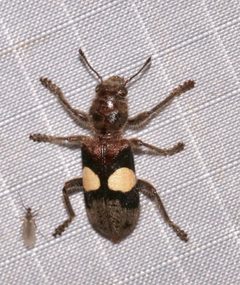
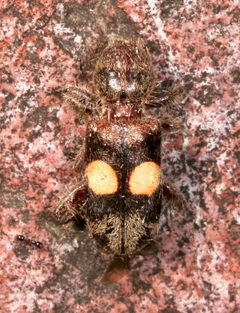
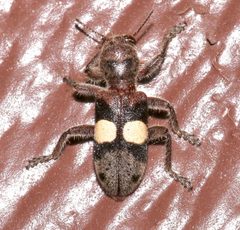
Enoclerus bimaculatus is a of checkered beetle in the Cleridae, found in North America. The species is characterized by two distinct spots on the . As a member of the Enoclerus—the largest genus in the Cleridae family in North America north of Mexico—this is a of other woodboring beetles, particularly bark beetles in the weevil Scolytinae. The species was first described by Skinner in 1905.
Pronunciation
How to pronounce Enoclerus bimaculatus: /ɛˈnoʊklərəs ˌbaɪməˈkjʊleɪtəs/
These audio files are automatically generated. While they are not always 100% accurate, they are a good starting point.
Identification
Enoclerus bimaculatus can be distinguished from other Enoclerus by the presence of two distinct spots on the , which gives the species its name ('bimaculatus' meaning 'two-spotted'). The Enoclerus is the largest in the Cleridae in North America north of Mexico, with 32 species, making specific identification within the genus important. The two-spotted pattern separates E. bimaculatus from other commonly encountered species such as E. ichneumoneus, which has a wide orange band across the middle of the elytra and an elongate scutellum.
Images
Habitat
Enoclerus bimaculatus is associated with dead wood , particularly recently fallen or dying trees. The has been recorded from pinyon pine (Pinus edulis) and oak (Quercus) woodlands in southwestern North America. are typically found on dead branches and trunks of trees where their prey—woodboring larvae—are present.
Distribution
North America. Specific records include the southwestern United States, particularly in pinyon/juniper and oak woodland . The has been documented in Arizona and surrounding regions.
Diet
As a member of the Cleridae , Enoclerus bimaculatus is predatory. The larvae and prey on woodboring beetles, particularly bark beetles in the weevil Scolytinae. Adults are known to be attracted to recently dead or dying trees where woodboring larvae are abundant.
Host Associations
- Pinus edulis - pinyon pine woodland
- Quercus hypoleucoides - silverleaf oak
Life Cycle
The of Enoclerus bimaculatus is typical of checkered beetles. are laid in or near the galleries of woodboring beetles. Larvae are predatory, feeding on the larvae of bark beetles and other woodboring . Development occurs within dead wood, with emerging to seek new material. Multiple may occur per year depending on climate and host availability.
Behavior
are active that search for prey on dead and dying trees. They are known to be attracted to freshly dead wood, where they likely detect produced by woodboring beetles. The has been observed running rapidly on tree trunks and branches, a typical of Enoclerus species searching for prey or oviposition sites.
Ecological Role
Enoclerus bimaculatus serves as an important agent of bark beetles and other woodboring beetles. By preying on these potentially destructive forest pests, checkered beetles help regulate of that can cause significant damage to trees. This predatory role makes them beneficial insects in forest .
Human Relevance
Enoclerus bimaculatus is of interest to entomologists and forest ecologists as a natural enemy of bark beetles, which are significant forest pests. The may contribute to the of bark beetle , though specific management applications have not been documented. Like other checkered beetles, E. bimaculatus is collected by enthusiasts and researchers studying Cleridae diversity and forest insect .
Similar Taxa
- Enoclerus ichneumoneusSimilar size and body form, but E. ichneumoneus has a wide orange band across the middle of the and an elongate scutellum rather than two distinct spots
- Enoclerus leconteiAnother common Enoclerus in similar , but with different elytral markings
- Enoclerus sphegeusSimilar preferences and geographic range, but with different color pattern
More Details
Taxonomic note
Enoclerus bimaculatus was described by Skinner in 1905. The Enoclerus, with 32 in North America north of Mexico, is the largest genus in the Cleridae . Species in this genus are among the most brightly colored and boldly patterned of checkered beetles.
Collection records
Specimens have been collected from pinyon/juniper woodland in Arizona, specifically from dying Pinus edulis (Colorado pinyon pine) and Quercus hypoleucoides (silverleaf oak). have been recorded in association with other woodboring beetles including Chrysobothris and cerambycids.
Sources and further reading
- BugGuide
- Wikipedia
- GBIF taxonomy match
- iNaturalist taxon
- checkered beetles | Beetles In The Bush
- Cleridae | Beetles In The Bush | Page 2
- Home invaders III - Fall field cricket, Gryllus pennsylvanicus — Bug of the Week
- What’s all this chirping about? Ask the fall field cricket, Gryllus pennsylvanicus — Bug of the Week
- The troubadour downstairs – fall field cricket, Gryllus pennsylvanicus — Bug of the Week
- Field crickets invade a home with a wake-up call: Fall field cricket, Gryllus pennsylvanicus — Bug of the Week