
Diabrotica virgifera zeae
Krysan & R. Smith, 1980
Mexican corn rootworm
Diabrotica virgifera zeae, the Mexican corn rootworm, is a of the western corn rootworm complex and a significant agricultural pest of corn (Zea mays) in Mexico and parts of the southern United States. Larvae feed on corn roots, causing damage that can lead to reduced yield, stunting, and plant lodging. Unlike the western corn rootworm subspecies (D. v. virgifera), the Mexican corn rootworm has been documented to damage corn following sorghum in parts of South Central Texas, though this remains rare. feed on corn silks, pollen, and leaves. The has one per year, with laid in soil during summer and fall, hatching the following spring when corn roots become available.
Pronunciation
How to pronounce Diabrotica virgifera zeae: //daɪˌæbɹəˈtiːkə ˌvɜːrdʒɪˈfɪərə ˈziː.i//
These audio files are automatically generated. While they are not always 100% accurate, they are a good starting point.
Identification
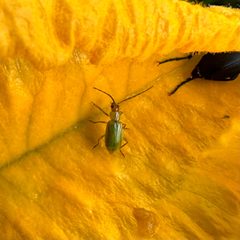
The Mexican corn rootworm is morphologically similar to the western corn rootworm (D. v. virgifera) and is distinguished primarily by geographic distribution and subtle biological differences rather than obvious external features. are small beetles, typically yellowish-green with black markings on the wing covers. Larvae are slender, white to cream-colored with a brown capsule and three pairs of thoracic legs. The status is confirmed through examination of male genitalia and geographic origin. In areas where both subspecies occur, identification to subspecies level requires taxonomic expertise.
Images
Habitat
Corn agroecosystems, specifically fields planted with Zea mays. The is associated with continuous corn production systems and can persist in areas where crop with non- crops is practiced less effectively than western corn rootworm. In South Central Texas, has been observed damaging corn following sorghum, indicating potential to local cropping systems.
Distribution
Central Mexico; southern United States including Texas, particularly the South Central and Coastal Bend regions. The occurs in areas where its range overlaps with or replaces that of the western corn rootworm.
Seasonality
hatch beginning mid-April in South Texas and mid-May in the High Plains, with hatching continuing for several weeks. activity peaks during summer, with egg-laying occurring shortly after corn silking. One per year.
Diet
Larvae feed exclusively on roots of corn (Zea mays), including root hairs, smaller roots, and primary roots. feed on corn silks, pollen, tassels, and leaves, with a preference for silks during the green silk stage.
Host Associations
- Zea mays - obligate Only known for larval development; feeding on roots is required for survival. feed on above-ground plant parts but do not complete development on other plant .
Life Cycle
One per year. lay in soil within cornfields, typically in the upper 2 to 8 inches. Eggs overwinter and hatch the following spring when soil temperatures rise and corn roots are available. Larvae progress through three instars while feeding on corn roots, then pupate in soil. Adults emerge in summer, feed on corn plant parts, and begin egg-laying shortly after silking. If corn roots are unavailable at egg hatch, larvae die.
Behavior
tend to remain in the same field where they developed as larvae, contributing to localized buildup. Adults are active fliers and feed on exposed corn silks, with heavy silk feeding during pollination potentially causing poor ear fill. In South Central Texas, has shown of damaging corn following sorghum , unlike typical western corn rootworm populations.
Ecological Role
Agricultural pest; no known significant ecological role in non-agricultural . are driven entirely by corn production practices.
Human Relevance
Major economic pest of corn production in Mexico and parts of the southern United States. Larval root feeding reduces yield, causes stunting, and can lead to plant lodging ('goosenecking'). silk feeding can interfere with pollination. Management relies on crop , Bt corn hybrids (with variable efficacy), soil-applied , and . Resistance to Bt toxins has been documented in related , with patterns between Cry3Bb1 and mCry3A toxins. As of early 2016, resistance had not been documented in Mexican or western corn rootworm in Texas, though resistance monitoring is ongoing.
Similar Taxa
- Diabrotica virgifera virgifera (western corn rootworm)Overlapping distribution and morphological similarity; distinguished by geographic range and that D. v. virgifera is more effectively controlled by crop , while D. v. zeae has shown ability to damage corn following sorghum in some areas.
- Diabrotica barberi (northern corn rootworm)Similar and pest status; distinguished by geographic distribution (northern corn rootworm occurs in more northern regions) and that northern corn rootworm has extended variants with hatching after two winters.
- Diabrotica undecimpunctata howardi (southern corn rootworm)Similar larval feeding damage; distinguished by having multiple per year, laying after corn seedling stage (making crop ineffective), and being relatively unaffected by Bt corn hybrids targeted at rootworms.
Sources and further reading
- BugGuide
- GBIF taxonomy match
- iNaturalist taxon
- NCBI Taxonomy
- UC Davis Researcher and Colleagues Target 'Billion-Dollar Pest' | Bug Squad
- Pre-emergence insect control - AgriLife Extension Entomology
- Appendix - AgriLife Extension Entomology
- Managing Insect and Mite Pests of Texas Corn - AgriLife Extension Entomology
- For Western Corn Rootworm, Combo of Management Methods Critical to Slow Insecticide Resistance
- Farmer Feedback: Needs Assessment Reveals Growers' Views on Corn Insect Pests in Iowa
- Field Biology of Mexican Corn Rootworm, Diabrotica virgifera zeae (Coleoptera: Chrysomelidae), in Central Mexico