
Monocesta
H. Clark, 1865
larger elm leaf beetle
Species Guides
1- Monocesta coryli(Larger Elm Leaf Beetle)
Monocesta is a of skeletonizing leaf beetles in the Chrysomelidae. The genus contains at least three described , with Monocesta coryli being the most well-known and commonly encountered in eastern North America. These beetles are characterized by their feeding that removes soft leaf tissue between , creating a distinctive skeletonized appearance on leaves. The genus is primarily associated with elm trees and related woodland vegetation.
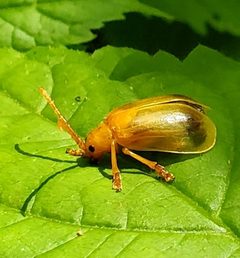
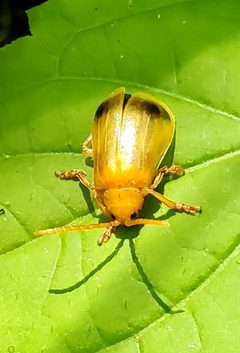
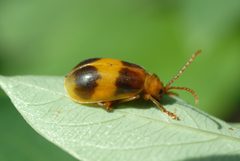
Pronunciation
How to pronounce Monocesta: //ˌmɒnəˈsɛstə//
These audio files are automatically generated. While they are not always 100% accurate, they are a good starting point.
Images
Distribution
Eastern United States, particularly in riparian forests and woodland areas where elm trees occur.
Seasonality
emerge from soil sites in spring to feed on new leaves and lay . Larvae develop through summer and autumn before returning to soil to overwinter and pupate.
Diet
and larvae feed on soft leaf tissue between tough leaf of elm trees (Ulmus spp.) and other woodland trees, creating characteristic skeletonized leaves.
Host Associations
- Ulmus americana - primary plantAmerican elm, primary for feeding and
Life Cycle
laid on leaves in spring; larvae feed on leaf tissue through summer and autumn; larvae move to soil to overwinter and to pupal stage; emerge the following spring.
Behavior
feed on leaves and lay in spring. Both adults and larvae skeletonize leaves by consuming soft tissue between , leaving behind a reticulate network of leaf tissue.
Ecological Role
Herbivore that contributes to natural defoliation of elms in wild settings. are regulated by parasitic tachinid flies that attack and kill the beetles.
Human Relevance
Occasional pest of elms in landscapes, but generally considered a minor pest compared to the introduced European elm leaf beetle (Xanthogaleruca luteola). Not a significant economic pest due to natural .
Similar Taxa
- Xanthogaleruca luteolaBoth are elm-feeding leaf beetles that skeletonize leaves, but X. luteola is smaller, introduced from Europe, and a more serious pest with multiple per year
More Details
Biological Control
When of larger elm leaf beetles increase, parasitic tachinid flies attack and kill the beetles, naturally reducing damage. This makes the primarily an occasional pest rather than a persistent problem.
Comparison with Invasive Relative
Unlike the European elm leaf beetle which has 2-4 annually and is a major urban pest, Monocesta coryli has a single generation per year and is primarily found in natural settings rather than cultivated landscapes.