Neochlamisus comptoniae
(W.J.Brown, 1943)
warty leaf beetle
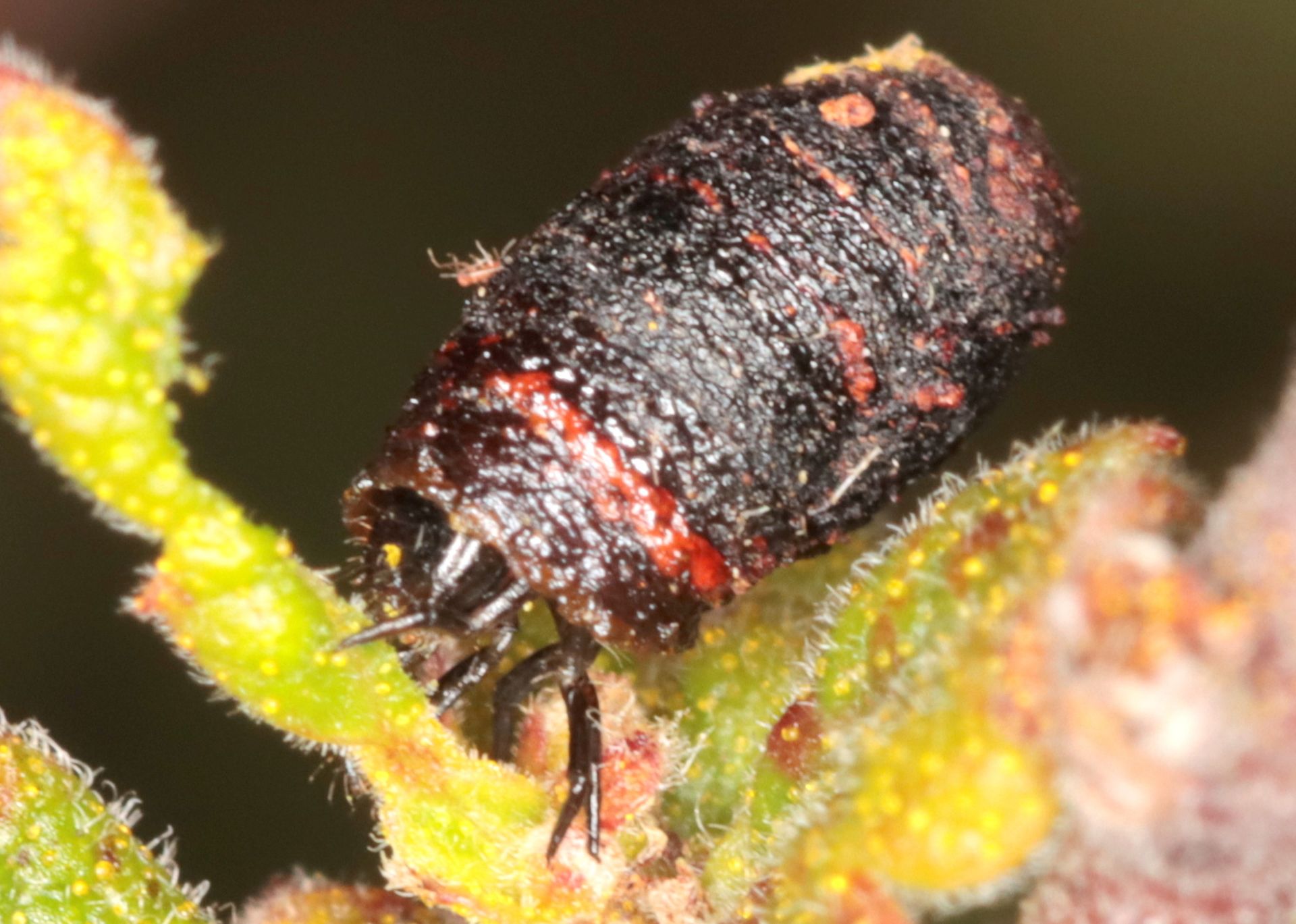
Neochlamisus comptoniae is a small warty leaf beetle in the Chrysomelidae, Cryptocephalinae. Like other members of the tribe Chlamisini, exhibit remarkable fecal mimicry—resembling caterpillar in size, shape, texture, and coloration. When disturbed, they retract their and fold legs and into precise grooves, eliminating any indication of being an insect. The is associated with sweetfern (Comptonia peregrina), a plant in the family Myricaceae.
Pronunciation
How to pronounce Neochlamisus comptoniae: /niːoʊkləˈmaɪsəs kɒmpˈtoʊnɪi/
These audio files are automatically generated. While they are not always 100% accurate, they are a good starting point.
Identification
are 3–4 mm in length with a dark, irregularly textured body that closely mimics caterpillar . The body surface is rough and warty, lacking the smooth, rounded contours typical of many leaf beetles. When disturbed, the retracts its and folds all six legs plus into grooves along the body, creating a seamless frass-like appearance with no visible appendages. The specific epithet comptoniae refers to its plant association. Similar Neochlamisus on other hosts (e.g., N. platani on sycamore, N. bebbiana on birch) may be distinguished by host plant and subtle coloration differences, though species-level identification often requires host data.
Images
Habitat
Associated with sweetfern (Comptonia peregrina) in open, sandy or disturbed where this plant occurs. Sweetfern is a nitrogen-fixing shrub of dry, acidic soils in northeastern North America.
Distribution
North America: recorded from Canada (New Brunswick, Nova Scotia, Ontario) and presumably the adjacent northeastern United States where sweetfern occurs.
Diet
and larvae feed on foliage of sweetfern (Comptonia peregrina).
Host Associations
- Comptonia peregrina - primary sweetfern; sole known plant
Life Cycle
Case-bearing larvae construct portable cases from fecal material and , a characteristic of the Cryptocephalinae. Females deposit with a fecal cap that serves as starting material for the larval case.
Behavior
exhibit -like defensive : upon disturbance, they retract and fold all appendages into body grooves to mimic inanimate caterpillar . If disturbance is severe, the may release its grip and drop from the leaf.
Ecological Role
Herbivore on sweetfern; serves as occasional prey for the Cerceris fumipennis, which primarily hunts jewel beetles (Buprestidae) but has been documented capturing Neochlamisus .
Similar Taxa
- Neochlamisus plataniSimilar size and fecal-mimicry ; distinguished by bright coppery coloration and association with eastern sycamore (Platanus occidentalis) rather than sweetfern
- Neochlamisus bebbianaSimilar ; associated with birch (Betula) ; documented as occasional prey of Cerceris fumipennis
- Exema speciesSmaller (2–3 mm), similar fecal mimicry and defensive ; associated with Asteraceae rather than Myricaceae