
Chelymorpha phytophagica
Crotch, 1873
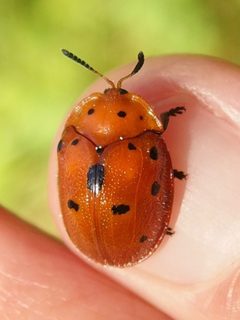
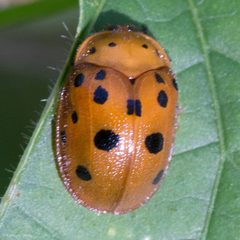
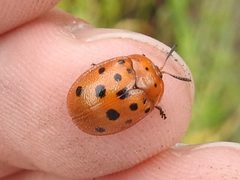
Chelymorpha phytophagica is a of tortoise beetle in the leaf beetle Chrysomelidae. The species is distributed across Central America and North America. Two are recognized: C. p. luteata and C. p. phytophagica. Like other members of the Chelymorpha, this species is associated with plants in the family Convolvulaceae, including morning glories and related vines.
Pronunciation
How to pronounce Chelymorpha phytophagica: /ˌkɛlɪˈmɔrfə ˌfaɪtoʊˈfædʒɪkə/
These audio files are automatically generated. While they are not always 100% accurate, they are a good starting point.
Identification
Members of the Chelymorpha can be distinguished from other tortoise beetles by their rounded, convex body form and the structure of the elytral margin. The C. phytophagica is recognized by its coloration and pattern, though specific diagnostic features separating it from closely related species require examination of morphological details. The C. p. luteata and C. p. phytophagica differ in coloration and elytral markings.
Images
Habitat
Associated with plants in the Convolvulaceae, particularly morning glory vines (Ipomoea spp.) and related plants. Found in where these host plants occur, including disturbed areas, agricultural fields, and natural vegetation.
Distribution
Central America and North America. Present in Middle America and North America according to distribution records.
Diet
Phytophagous, feeding on leaves of Convolvulaceae. Both larvae and consume leaf tissue of plants.
Host Associations
- Convolvulaceae - primary Morning glory plants including Ipomoea
Ecological Role
Herbivore on Convolvulaceae. Like other Chelymorpha , may sequester alkaloids from plants for chemical defense against .
Similar Taxa
- Chelymorpha cassideaSimilar rounded body form and association with Convolvulaceae; differs in distribution and specific coloration pattern
- Chelymorpha variansRelated South American with highly variable coloration; differs in geographic range
More Details
Subspecies
Two are recognized: Chelymorpha phytophagica luteata Schaeffer and Chelymorpha phytophagica phytophagica. These differ in coloration and pattern elements.
Chemical defense
Based on knowledge of related in the , C. phytophagica likely sequesters toxic alkaloids from its Convolvulaceae plants, making it unpalatable to . This aposematic strategy is well-documented in the related species C. cassidea.
Sources and further reading
- BugGuide
- Wikipedia
- GBIF taxonomy match
- iNaturalist taxon
- NCBI Taxonomy
- Catalogue of Life
- Bugs in Orange and Black III – Argus tortoise beetle, Chelymorpha cassidea; oleander caterpillar, Syntomeida epilais; and wheel bug, Arilus cristatus (MISSING LINKS) — Bug of the Week
- Chrysomelidae | Beetles In The Bush | Page 4
- Bibliography | Beetles In The Bush