
Octotoma
Species Guides
3- Octotoma championi(lantana leafminer)
- Octotoma marginicollis
- Octotoma plicatula(Trumpet Creeper Leafminer)
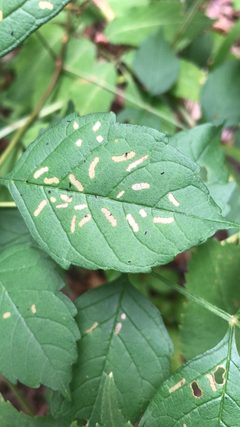
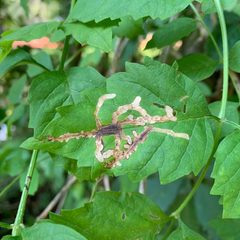
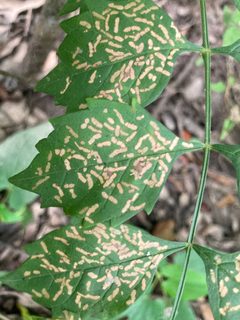
Octotoma is a of tortoise beetles and hispines (Coleoptera: Chrysomelidae) comprising approximately 11–12 described . Members of this genus are leaf-mining beetles with documented associations to camara, an weed. Several species, notably O. championi and O. scabripennis, have been extensively studied and employed as agents. The genus exhibits a leaf-mining larval phase followed by free-living, leaf-chewing .
Pronunciation
How to pronounce Octotoma: /ˌɒk.təˈtoʊ.mə/
These audio files are automatically generated. While they are not always 100% accurate, they are a good starting point.
Images
Habitat
Associated with camara plants; larvae are endophagous leaf miners within leaves, while are free-living on foliage.
Distribution
have been introduced to Hawaii and Australia for purposes; native range not specified in available sources.
Diet
camara (leaf tissue); larvae mine within leaves, chew leaf tissue.
Host Associations
- Lantana camara - primary Feeding, development, and oviposition restricted almost entirely to this ; confirmed through specificity testing in Hawaii
Life Cycle
Leaf-mining larval phase followed by within leaf tissue; free-living, leaf-chewing stage. Development time accelerated by approximately 10–13 days under elevated temperature conditions.
Behavior
Larvae are endophagous leaf miners; exhibit free-living leaf-chewing . Feeding and oviposition behavior has been studied in field and simulated-field experimental conditions.
Ecological Role
Human Relevance
Employed as agents for camara, an important weed in multiple countries. specificity testing demonstrated narrow host range, supporting suitability for programs.
Similar Taxa
- Uroplata girardiAlso a leafmining used as agent; both share similar ecological role, associations, and were studied concurrently in Hawaii and Australia. Distinguished by taxonomic placement in different within Chrysomelidae: Hispinae.
Sources and further reading
- BugGuide
- Wikipedia
- GBIF taxonomy match
- iNaturalist taxon
- NCBI Taxonomy
- Catalogue of Life
- The suitability ofOctotoma scabripennisGuér. andUroplata girardiPic (Col., Chrysomelidae) for the control ofLantana(Verbenaceae) in Australia
- Parasitism and predation of the lantana leafmining beetles Octotoma scabripennis Guérin‐Méneville and Uroplata girardi Pic (Coleoptera: Chrysomelidae: Hispinae) in Australia
- Effects of elevated CO2 and temperature on development and consumption rates of Octotoma championi and O. scabripennis feeding on Lantana camara