
Mallodonini
Genus Guides
4- Mallodon(hardwood stump borer)
- Neomallodon
- Nothopleurus
- Stenodontes
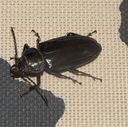
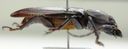
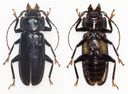
Mallodonini is a tribe of longhorn beetles within the Prioninae. Members are characterized by robust bodies, large , and association with dead or decaying wood. The tribe includes such as Mallodon and allied distributed primarily in tropical and subtropical regions.
Pronunciation
How to pronounce Mallodonini: /mæl.oʊˈdɒn.aɪ.naɪ/
These audio files are automatically generated. While they are not always 100% accurate, they are a good starting point.
Identification
Mallodonini can be distinguished from other Prioninae tribes by a combination of characters including the presence of a stridulatory file on the , enlarged particularly in males, and often conspicuously spined . The pronotum typically bears lateral spines or . are generally long but not exceeding body length in most .
Images
Habitat
Associated with forested environments, particularly mature or trees. Larvae develop in dead or decaying wood of hardwoods and occasionally conifers. are often found on or near trees, particularly at night.
Distribution
Primarily distributed in the Neotropical, Afrotropical, and Oriental regions. Records exist from Central and South America, sub-Saharan Africa, Madagascar, and Southeast Asia.
Diet
Larvae feed on dead wood, consuming cellulose and associated fungal material. feeding habits are poorly documented but likely include sap, bark, or minimal feeding.
Host Associations
- Hardwood trees - larval developmentVarious broadleaf tree , often in advanced decay stages
- Conifers - larval developmentOccasional records, less common than hardwoods
Life Cycle
Complete with , larval, pupal, and stages. Larvae are wood-borers, creating galleries in dead wood. Development period varies with wood condition and climate, potentially spanning multiple years in larger .
Behavior
are primarily and attracted to light. Males use enlarged in combat with other males. Stridulation, produced by rubbing the prosternal file against mesosternal structures, has been observed in defensive contexts.
Ecological Role
Contributes to wood decomposition and nutrient cycling in forest . Creates exit holes and galleries that may be used by other organisms. Serves as prey for woodpeckers and other .
Human Relevance
Occasional pest of timber and wooden structures, though generally restricted to dead or dying wood rather than sound seasoned timber. Some are valued by collectors due to large size and distinctive .
Similar Taxa
- PrioniniAlso large Prioninae with robust bodies; distinguished by absence of prosternal stridulatory file and different antennal structure
- MacrotominiSimilar wood-boring habits and body form; separated by characters of the pronotum, , and male genitalia
- AcanthophoriniOverlapping distribution and ; distinguished by details of structure and pronotal armature
More Details
Taxonomic history
Mallodonini has undergone periodic revision, with some transferred to or from related tribes. The current circumscription follows recent morphological and molecular studies, though boundaries with Macrotomini remain under investigation.
Stridulatory apparatus
The prosternal stridulatory file is a diagnostic feature of the tribe and has been studied in relation to defensive against and aggression.