
Nothopleurus
Lacordaire, 1869
Species Guides
2- Nothopleurus madericus
- Nothopleurus serratus(Southwestern Stump Borer)
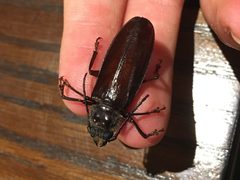
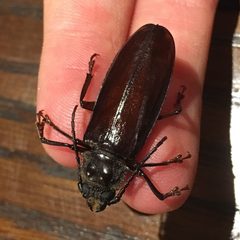
Nothopleurus is a of longhorn beetles in the Cerambycidae, Prioninae. The genus comprises five recognized distributed across North America, the Caribbean, and parts of the Middle East. These beetles belong to the tribe Macrotomini, a group characterized by large size and robust .
Pronunciation
How to pronounce Nothopleurus: //ˌnoʊθoʊˈplʊərəs//
These audio files are automatically generated. While they are not always 100% accurate, they are a good starting point.
Identification
Members of Nothopleurus can be distinguished from other prionine by their elongated, somewhat flattened body form and the characteristic structure of the pronotum, which typically bears lateral or spines. The genus is most readily separated from the closely related Macrotoma by differences in antennal segment proportions and the degree of elytral sculpturing. -level identification requires examination of male genitalia and detailed comparison of pronotal and elytral tuberculation patterns.
Images
Distribution
The has a disjunct distribution spanning the southwestern United States and Mexico (N. castaneum, N. lobigenis), the Caribbean including Madeira (N. madericus), and the Arabian Peninsula (N. arabicus). Nothopleurus subsulcatus has the broadest range, occurring across parts of Europe and Asia.
Similar Taxa
- MacrotomaBoth belong to tribe Macrotomini and share large body size, robust , and prionine . Nothopleurus differs in having more pronounced pronotal lateral and relatively shorter antennal segments.
- PrionusAnother large prionine with overlapping geographic range in North America. Prionus generally lack the distinct pronotal characteristic of Nothopleurus and have different antennal serration patterns.
More Details
Taxonomic History
The was established by Lacordaire in 1869 to accommodate previously placed in Prionus or related genera. The type species is Nothopleurus subsulcatus (Dalman, 1823), originally described as Prionus subsulcatus. The inclusion of N. arabicus represents an unusual geographic outlier for the genus, which is otherwise concentrated in the New World.