
Necydalis cavipennis
LeConte, 1873
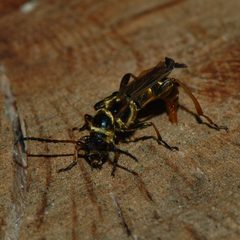
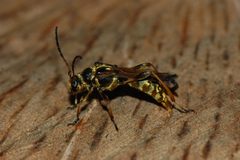
Necydalis cavipennis is a long-horned beetle in the Cerambycidae, characterized by its -mimicking appearance. The occurs in Central America and North America, with records extending into British Columbia. It belongs to the Necydalinae, a group noted for their striking mimicry of Hymenoptera. The Necydalis contains several species with similar mimetic adaptations.

Pronunciation
How to pronounce Necydalis cavipennis: /nɛˈkɪdəlɪs ˌkævɪˈpɛnɪs/
These audio files are automatically generated. While they are not always 100% accurate, they are a good starting point.
Identification
Distinguished from other cerambycids by its extreme mimicry, including a constricted waist and shortened that leave multiple abdominal segments exposed. The Necydalis can be separated from similar mimetic cerambycids by the combination of elytral reduction and specific antennal proportions. N. cavipennis specifically is identified by details of the pronotal and elytral referenced in the epithet. Similar superficial wasp-mimicking beetles include some species of Clytus and Plagionotus, but these lack the abdominal exposure and waist constriction seen in Necydalis.
Images
Appearance
exhibit pronounced mimicry, with elongated bodies, narrow waists, and contrasting coloration patterns that resemble vespid wasps. The are shortened, exposing much of the . are long, though not as dramatically elongated as in some cerambycid groups. The specific epithet "cavipennis" refers to hollow or excavated wing characteristics. Coloration typically involves combinations of black, yellow, and reddish-brown tones that enhance the wasp-like illusion.
Habitat
Associated with forested environments, particularly those containing suitable larval trees. The has been documented in montane and canyon in western North America, including the Chiricahua Mountains of Arizona. Specific microhabitat preferences for appear to include sun-exposed wood surfaces and flowers.
Distribution
Central America and North America. North American records include the southwestern United States (Arizona) and western Canada (British Columbia). The has been documented in the Chiricahua Mountains of southeastern Arizona.
Seasonality
have been observed in June in Arizona. Specific across the full range is not well documented.
Life Cycle
Larval development occurs in wood, typical of Cerambycidae. Specific tree for N. cavipennis are not documented in available sources, though related Necydalis species are associated with various hardwoods and conifers.
Behavior
are wary and alert, a trait common in the that may relate to their -mimicking appearance. When disturbed, they exhibit rapid, wasp-like that enhances the mimetic deception. The mimetic appearance likely provides protection from vertebrate that avoid stinging wasps.
Ecological Role
As larvae, contributes to wood decomposition and nutrient cycling in forest . The mimicry represents a form of that may influence -prey dynamics in where both the and model wasps occur.
Human Relevance
Of interest to entomologists and collectors due to its striking appearance and mimicry. No documented economic or pest significance. The is occasionally encountered by field biologists in western montane .
Similar Taxa
- Necydalis mellitaAnother North American Necydalis with similar -mimicking ; distinguished by geographic range and subtle structural differences
- Clytus arietisEuropean wasp-mimicking cerambycid with similar coloration but lacks the shortened and exposed of Necydalis
- Vespula waspsThe hymenopteran models for Necydalis mimicry; can be distinguished by wing structure, , and
More Details
Taxonomic placement
Necydalis cavipennis was described by John Lawrence LeConte in 1873. The is classified in the Necydalinae, which contains approximately 40 species in 6 worldwide. The subfamily is characterized by extreme morphological modifications associated with mimicry, including elytral reduction and body shape convergence with vespid wasps.
Mimicry system
The Necydalis represents one of the most striking examples of mimicry (myrmecomorphy/vespid mimicry) in beetles. The shortened , which is unusual in beetles and convergent with the exposed of wasps, may also affect mechanics, producing a wasp-like flight pattern that reinforces the visual deception.