
Necydalis mellita
(Say, 1835)
Slender Long-horned Beetle
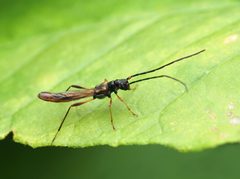
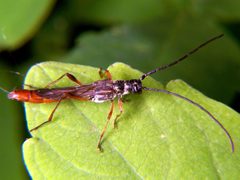
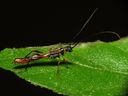
Necydalis mellita is a longhorn beetle in the Cerambycidae, characterized by its -mimicking appearance. are approximately 2 cm in length with longer than the body. The exhibits through its black and red coloration, elongate body, short that expose the wings, and constricted pronotum. This morphological convergence with wasps likely provides protection from .
Pronunciation
How to pronounce Necydalis mellita: /nɛˈkɪdəlɪs mɛˈliːtə/
These audio files are automatically generated. While they are not always 100% accurate, they are a good starting point.
Identification
Distinguished from other longhorn beetles by the combination of: extremely long (exceeding body length), very short leaving and wings exposed, and slender -like body with constricted pronotum. The black and red coloration further enhances wasp mimicry. Similar to other Necydalis , which share this general body plan; species-level identification requires examination of specific morphological details not described in available sources.
Images
Distribution
North America; recorded from Ontario, Canada and the United States. Specific state/province records are limited in available sources.
Similar Taxa
- Other Necydalis speciesShare the distinctive short-, long-, slender body form characteristic of the . N. mellita specifically distinguished by details of coloration and not fully specified in available sources.
- Wasps (Hymenoptera)Convergent appearance due to ; beetles distinguished by hardened forewings (), even though shortened, and other coleopteran features.
More Details
Mimicry system
The morphological features of Necydalis mellita represent a documented case of , where a harmless evolves to resemble a harmful or unpalatable model (, in this case) to deter .