
Gaurotes
LeConte, 1850
Species Guides
2Gaurotes is a of longhorn beetles in the Cerambycidae, Lepturinae. The genus contains approximately 25 described distributed across the Holarctic region, with notable diversity in East Asia and North America. Species are typically small to medium-sized beetles with metallic coloration. The genus was established by LeConte in 1850 and includes several subgenera: Carilia, Gaurotes (sensu stricto), and Paragaurotes.
Pronunciation
How to pronounce Gaurotes: //ɡaʊˈroʊtiːz//
These audio files are automatically generated. While they are not always 100% accurate, they are a good starting point.
Identification
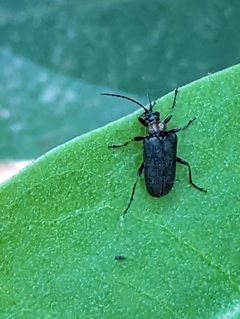
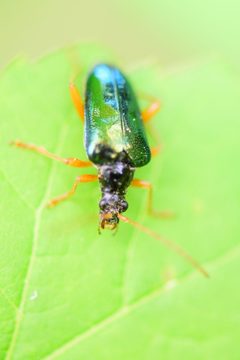
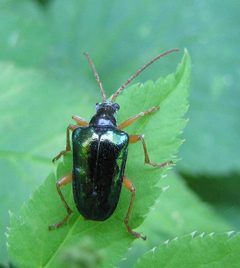
Members of Gaurotes can be distinguished from related lepturine by their compact, somewhat parallel-sided body form and typically metallic blue, green, or coppery coloration. The pronotum is usually slightly narrower than the elytral base and lacks strong lateral or spines. are of moderate length, generally not exceeding the elytral apex. The genus is most similar to Pseudogaurotina and Brachyleptura, but differs in details of antennal structure and male genitalia. -level identification often requires examination of the and fine details of punctation and color pattern.
Images
Habitat
of Gaurotes are associated with coniferous and mixed forests. are frequently found on flowers, particularly umbellifers and other herbaceous vegetation, where they feed on pollen and nectar. Larval development occurs in dead or dying wood of conifers, particularly Pinus, Picea, and Abies species.
Distribution
The has a Holarctic distribution. North American occur primarily in the eastern and western United States and Canada. Eurasian species are distributed across northern Europe (G. virginea), Siberia (G. ussuriensis), and extend through Central Asia to the Himalayas and East Asia, with notable diversity in China, Japan, and Taiwan.
Seasonality
are active primarily during the summer months, typically from June through August in temperate regions. Activity periods vary by latitude and elevation.
Diet
feed on pollen and nectar of various flowering plants. Larvae are wood-borers, developing in dead or dying coniferous wood.
Host Associations
- Pinus - larval dead or dying wood
- Picea - larval dead or dying wood
- Abies - larval dead or dying wood
Life Cycle
Complete with , larva, pupa, and stages. Larvae bore in coniferous wood, likely requiring 1-2 years for development depending on and conditions. Adults emerge in summer and are relatively short-lived.
Behavior
are and frequent flowers, where they are slow-moving and often permit close approach. They are not strong fliers and tend to remain in localized areas with suitable floral resources. When disturbed, adults may drop to the ground or tuck their appendages tight to the body, presenting a hard, rounded profile.
Ecological Role
contribute to pollination of herbaceous plants through pollen and nectar feeding. Larvae function as primary decomposers in coniferous forest , breaking down dead wood and facilitating nutrient cycling. They are a food source for woodpeckers and other .
Human Relevance
No significant economic importance. are occasionally collected by entomologists and are represented in natural history collections. Some , particularly G. virginea in Europe and G. cyanipennis in North America, are familiar to enthusiasts due to their attractive metallic coloration.
Similar Taxa
- PseudogaurotinaSimilar body form and coloration, but differs in antennal structure and male genitalia; historically confused with Gaurotes
- BrachylepturaOverlaps in and flower-visiting , but typically has more elongate body form and different antennal proportions
- LepturaRelated lepturine with similar flower-visiting habits, but usually has more elongate body and distinct elytral patterns
More Details
Subgeneric Classification
The is divided into three subgenera: Carilia (Palearctic with modified male forelegs), Gaurotes (sensu stricto, primarily Nearctic), and Paragaurotes (Siberian and East Asian species). Several species remain unplaced to subgenus (incertae sedis).
Taxonomic History
The has undergone repeated revision, with many transferred to or from related genera. The North American fauna was revised by Linsley and Chemsak, while the Palearctic species have been treated by several European and Japanese .