
Centrodera
LeConte, 1850
Species Guides
10- Centrodera autumnata(flower longhorn)
- Centrodera dayi
- Centrodera decolorata(Discolored Long-horned Beetle)
- Centrodera nevadica
- Centrodera oculata(flower longhorn)
- Centrodera osburni(flower longhorn beetle)
- Centrodera quadrimaculata
- Centrodera spurca(yellow Douglas-fir borer)
- Centrodera sublineata(flower longhorn beetle)
Centrodera is a of longhorn beetles (Cerambycidae) in the Lepturinae, tribe Rhagiini. The genus was established by LeConte in 1850 and contains approximately 11 recognized distributed in North America, with the majority restricted to the United States. Species include Centrodera spurca, C. decolorata, C. nevadica, and C. sublineata, among others. The genus is associated with coniferous and mixed woodlands, with some species showing relationships with Douglas-fir and other trees.
Pronunciation
How to pronounce Centrodera: /sɛn.trəˈdɛ.rə/
These audio files are automatically generated. While they are not always 100% accurate, they are a good starting point.
Identification
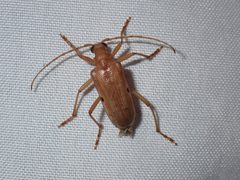
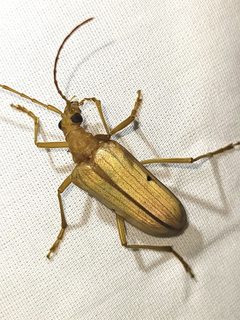
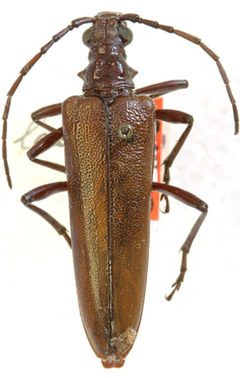
Centrodera are lepturine longhorn beetles characterized by elongated bodies typical of the flower longhorn group. Centrodera spurca (yellow Douglas-fir borer) is notably large and blonde-colored, distinguishing it from darker . The can be distinguished from similar lepturine genera by a combination of antennal proportions, pronotal shape, and elytral , though species-level identification requires examination of specific characters such as coloration, patterns, and male genitalia.
Images
Habitat
of Centrodera are associated with forested , particularly montane coniferous woodlands and mixed juniper-oak-pinyon woodlands. Centrodera spurca has been documented in alpine coniferous forest with Douglas-fir (Pseudotsuga menziesii) and Gambel oak (Quercus gambelii), as well as in ponderosa pine-dominated areas. Other species occur in juniper woodlands and oak-dominated habitats at moderate elevations.
Distribution
The is distributed in North America, with most to the United States. Documented occurrences span from the Pacific Coast states (California, Oregon, Washington) through the Rocky Mountain region (Colorado, New Mexico, Arizona) to the Great Plains and northeastern states (Vermont). Specific species show restricted ranges: Centrodera spurca occurs in Pacific Coast states with disjunct in New Mexico; C. nevadica is associated with the Great Basin and adjacent regions; C. decolorata has a broader eastern distribution.
Seasonality
activity appears to peak during late spring through summer (May–August), with specific timing varying by elevation and latitude. In montane of New Mexico and Arizona, adults have been collected in June and July. The seasonality of lower-elevation is less documented but likely extends earlier in the year.
Host Associations
- Pseudotsuga menziesii - larval Centrodera spurca associated with Douglas-fir, based on collection records from freshly dead trees and trap placements in Douglas-fir
- Quercus gambelii - association of Centrodera spurca captured in traps hung in Gambel oak in montane coniferous forest
- Pinus ponderosa - association present in ponderosa pine-dominated montane forests
Behavior
have been captured in sweet red wine-baited jug traps, indicating attraction to fermenting baits typical of many lepturine cerambycids. Centrodera spurca has been documented flying to traps during daylight hours in montane . Larval is presumed to involve wood-boring in coniferous , though direct observations of larval are lacking.
Ecological Role
As wood-boring beetles, Centrodera likely contribute to nutrient cycling in forest through the decomposition of dead and dying wood. Their association with coniferous suggests a role in the successional dynamics of montane and coniferous forest .
Human Relevance
Centrodera spurca (yellow Douglas-fir borer) is of occasional interest to forest entomologists due to its association with Douglas-fir. The has been documented in forest insect surveys and biodiversity studies. No significant economic impact as a pest has been reported.
Similar Taxa
- StenocorusSimilar lepturine and shared in montane coniferous forests; Stenocorus typically have different antennal proportions and elytral coloration patterns
- LepturaConvergent flower longhorn and attraction to similar baits; Leptura generally show different pronotal shapes and more contrasting color patterns
- EvodinusShared tribe Rhagiini and similar associations; distinguished by differences in body proportions and antennal structure
More Details
Taxonomic note
Centrodera spurca was historically known from Pacific Coast states; a disjunct in the Sacramento Mountains of New Mexico represents a significant range extension. This population was documented in sweet red wine-baited traps placed in Quercus gambelii along the margin of alpine coniferous forest at approximately 9000 feet elevation, suggesting broader ecological amplitude than previously recognized.
Collection methods
Effective collection methods include sweet red wine-baited jug traps hung in suitable trees, beating of branches of oak and conifer , and examination of freshly dead coniferous material. The species shows strong attraction to ethanol-enhanced wine baits typical of the Lepturinae .