
Saperda discoidea
Fabricius, 1798
Hickory Saperda
Saperda discoidea is a longhorned beetle in the Cerambycidae, first described by Fabricius in 1798. It is commonly known as the Hickory Saperda. The species belongs to the Saperda, a group of wood-boring beetles whose larvae develop in living or stressed deciduous trees. Like other members of its genus, this species is associated with hardwood , with hickory indicated by its . It occurs in North America with records from Canada (Ontario and Québec) and the United States.
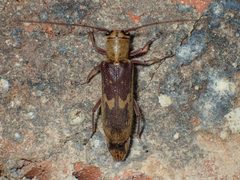
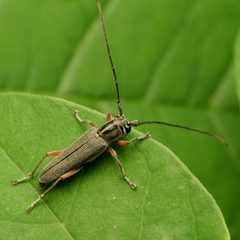
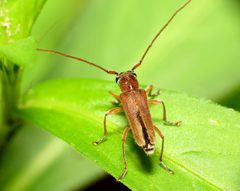
Pronunciation
How to pronounce Saperda discoidea: /səˈpɛrdə ˌdɪskoɪˈdiːə/
These audio files are automatically generated. While they are not always 100% accurate, they are a good starting point.
Images
Distribution
North America. Documented occurrences include Ontario and Québec in Canada, with additional records from the United States. The has 179 observations recorded on iNaturalist.
Host Associations
- hickory - larval developmentindicated by , specific not confirmed in sources
More Details
Taxonomic History
First described by Johan Christian Fabricius in 1798, making it one of the earlier described in the Saperda. The specific epithet 'discoidea' likely refers to some disc-like morphological feature, though the exact characteristic is not detailed in available sources.
Sources and further reading
- BugGuide
- Wikipedia
- GBIF taxonomy match
- iNaturalist taxon
- NCBI Taxonomy
- Catalogue of Life
- Pensoft Editorial Team | Blog - Part 90
- Drought, borers and dead trees - Roundheaded borers, Cerambycidae — Bug of the Week
- Recent literature – The Coleopterists Bulletin | Beetles In The Bush
- Phocus on Phyllobrotica | Beetles In The Bush
- North America’s most recognizable longhorned beetle | Beetles In The Bush
- Bug Eric: From My Inbox