
Pogonocherus mixtus
Haldeman, 1847
Mixed-spotted Flatface Sawyer
Pogonocherus mixtus is a of longhorned beetle in the Cerambycidae, described by Haldeman in 1847. It occurs across northern and western North America, with records from Canada and the United States. Like other members of the , it is associated with coniferous , particularly pines. The species is part of the Lamiinae, commonly known as flat-faced longhorns.
Pronunciation
How to pronounce Pogonocherus mixtus: //pɒɡəˈnɒkərəs ˈmɪkstəs//
These audio files are automatically generated. While they are not always 100% accurate, they are a good starting point.
Identification
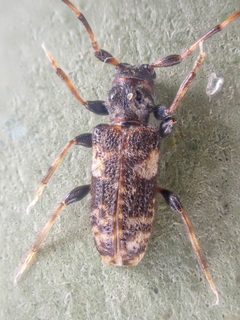
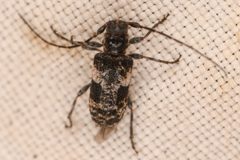
Distinguished from other Pogonocherus by its mixed or variegated color pattern. The Pogonocherus is characterized by small size, flattened , and association with coniferous . P. mixtus specifically can be separated from the more uniformly colored P. penicillatus and other by its less uniform, mixed coloration. Examination of genitalia or detailed comparison with may be required for definitive identification.
Images
Habitat
Coniferous forests, particularly pine woodlands. Associated with dead or dying coniferous trees and branches where larvae develop under bark. The has been recorded from pinyon-juniper woodland and ponderosa pine forest in western North America.
Distribution
Northern and western North America. Recorded from Canada (Alberta, British Columbia, Manitoba, New Brunswick) and the United States. Western occur in pinyon-juniper and ponderosa pine zones.
Seasonality
have been collected in late June and early July in western North America. Likely active during summer months, with peak activity varying by latitude and elevation.
Host Associations
- Pinus edulis - larval Pinyon pine; larvae develop under bark of dead/dying branches
- Pinus ponderosa - larval Ponderosa pine
Life Cycle
Larvae are wood-borers that develop under bark of dead or dying coniferous branches and trunks. occurs in pupal chambers constructed in the wood. emerge and may be found on material or, less commonly, on flowers.
Behavior
Larvae bore in dead and dying coniferous wood, particularly pine. are likely or , with limited activity. Attracted to dead material where oviposition occurs.
Ecological Role
Decomposer in coniferous forest ; contributes to nutrient cycling by breaking down dead wood. Serves as prey for woodpeckers and other . Provides for and in larval galleries.
Human Relevance
Minor significance as a forest insect; not considered a pest of living trees. Of interest to coleopterists and forest entomologists studying coniferous wood-boring .
Similar Taxa
- Pogonocherus penicillatusSimilar size and but with more uniform coloration; P. mixtus has mixed/variegated pattern
- Other Pogonocherus speciesRequire careful examination of color pattern and genitalia for separation
- Other small LamiinaeSimilar flattened and wood-boring habits; identification requires examination of antennal structure and other characters
More Details
Taxonomic history
Described by Samuel Stehman Haldeman in 1847, one of the earliest American coleopterists. The specific epithet 'mixtus' refers to the mixed or variegated color pattern.
Collection methods
Best collected by beating dead pine branches, peeling bark from recently dead trees, or rearing from infested wood. may occasionally be attracted to lights.