
Parmenini
Genus Guides
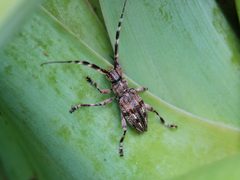
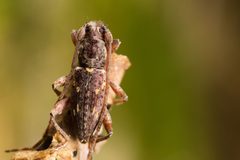
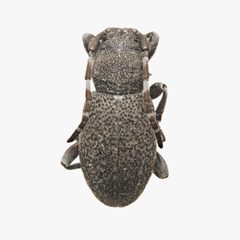
3Parmenini is a tribe of longhorn beetles within the Lamiinae of the Cerambycidae. The tribe contains approximately 80 distributed across multiple continents, with representatives in North America, South America, Europe, Asia, and Australasia. Members exhibit considerable morphological diversity, ranging from small to moderately sized beetles with varied body forms and antennal lengths. The tribe was taxonomically treated by Linsley and Chemsak (1984) in their comprehensive monograph of North American Cerambycidae.
Pronunciation
How to pronounce Parmenini: //pɑːrˈmɛnɪnaɪ//
These audio files are automatically generated. While they are not always 100% accurate, they are a good starting point.
Identification
Identification to tribal level requires examination of multiple characters including antennal structure, pronotal shape, elytral sculpturing, and male genitalia. The tribe is distinguished from other Lamiinae tribes by combinations of characters rather than single diagnostic features. Linsley and Chemsak (1984) provided keys for North American representatives. Some formerly placed in Parmenini have been reassigned to other tribes based on phylogenetic studies.
Images
Habitat
Associated with woody vegetation; larvae develop in dead or dying wood of various tree and shrub . Specific associations vary widely among . frequently found on host plants, in , or attracted to artificial light sources.
Distribution
Widespread across multiple biogeographic regions: Nearctic (North America), Neotropical (Central and South America), Palearctic (Europe and Asia), Oriental (Southeast Asia), and Australasian (Australia, New Zealand, and Pacific islands). The tribe shows highest diversity in tropical and subtropical regions.
Seasonality
activity patterns vary by and geographic region; in temperate zones, most active during spring and summer months. Some genera exhibit extended periods, while others have restricted seasonal tied to .
Life Cycle
Complete with wood-boring larvae. Larvae tunnel in dead or dying wood, feeding on cellulose and associated fungi. occurs within larval galleries. timing varies; some require multiple years to complete development depending on wood quality and environmental conditions.
Behavior
are primarily or . Many are attracted to light. When disturbed, some members exhibit defensive postures including raising the (convergent with unrelated groups). capability varies; some contain flightless species, particularly on islands or in arid environments.
Ecological Role
Decomposers of dead wood; larvae contribute to nutrient cycling in forest . Some may serve as secondary invaders of stressed or damaged trees. may incidentally pollinate flowers when feeding on nectar or pollen.
Human Relevance
Generally of minor economic importance. A few may damage timber or ornamental trees, but most are associated with already dead or dying wood. Some (e.g., Moneilema) are specialized on cacti and may occasionally impact ornamental plantings. The tribe has been extensively studied for taxonomic and systematic purposes.
Similar Taxa
- AcanthoderiniAnother tribe within Lamiinae; some historically confused with Parmenini. Distinguished by different antennal and pronotal characters.
- PogonocheriniSimilar body form and preferences; distinguished by details of antennal structure and male genitalia.
More Details
Taxonomic History
The tribal classification of Lamiinae has undergone substantial revision. Linsley and Chemsak (1984) treated Parmenini as one of 18 tribes in their monograph of North American Lamiinae, including from Parmenini through Acanthoderini. Subsequent phylogenetic studies have led to reassignments of some genera, and the tribal boundaries remain under investigation.
Notable Genera
The Moneilema (cactus beetles) is among the most distinctive members, comprising flightless, cactus-associated in North America. The genus Plectrura includes the striking cottonwood borer (Plectrodera scalator), one of North America's most recognizable longhorn beetles due to its large size and bold black-and-white pattern.
Research Significance
Parmenini has served as a model group for studies of -plant , particularly the repeated evolution of flightlessness and cactus specialization in Moneilema. The tribe also figures prominently in historical and ongoing taxonomic revisions of the Cerambycidae.
Sources and further reading
- BugGuide
- Wikipedia
- iNaturalist taxon
- NCBI Taxonomy
- Catalogue of Life
- Four-humped Longhorned Beetle | Beetles In The Bush
- Cactus beetle redux! | Beetles In The Bush
- Nomenclatural changes in Phymatodes | Beetles In The Bush
- North America’s most recognizable longhorned beetle | Beetles In The Bush
- Q: How do you photograph cactus beetles? | Beetles In The Bush