
Plectrodera scalator
(Fabricius, 1792)
Cottonwood Borer
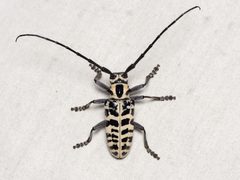
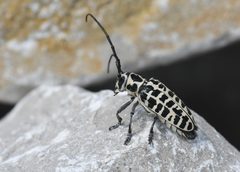
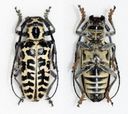
Plectrodera scalator, commonly known as the Cottonwood Borer, is a large and striking longhorned beetle (Cerambycidae) native to North America. It is the sole in the Plectrodera. are immediately recognizable by their robust body and distinctive checkered pattern of dense white on a black background. The species is strongly associated with cottonwood (Populus deltoides) and other Populus species, where adults are most frequently encountered. Despite being described as common in the Great Plains, direct observations remain relatively infrequent, possibly due to cryptic against foliage backgrounds.
Pronunciation
How to pronounce Plectrodera scalator: //plɛkˈtrɒdɛrə skəˈleɪtɔr//
These audio files are automatically generated. While they are not always 100% accurate, they are a good starting point.
Identification
The combination of large size, robust build, and striking black-and-white checkered pattern makes this among the most readily identifiable North American longhorned beetles. No other in the eastern two-thirds of North America shares this distinctive appearance. Sex can be determined by length relative to body and overall body robustness.
Images
Habitat
Associated with riparian and floodplain where trees occur. found on cottonwood and other Populus , particularly saplings and younger trees. Larval habitat is within wood of living host trees.
Distribution
Eastern two-thirds of the United States, especially abundant in the Great Plains. Range extends from the Mississippi River valley westward through the plains states. Records from Kansas, Oklahoma, Texas, Missouri, Illinois, and throughout the central U.S.
Seasonality
active primarily in summer months (June–August). Peak activity varies regionally with local climate conditions.
Diet
Larvae feed internally in living wood of cottonwood (Populus deltoides) and related Populus . feeding habits are not well documented but likely involve bark and leaf tissues of plants.
Host Associations
- Populus deltoides - primary Eastern cottonwood, favored throughout range
- Populus - Other cottonwood and poplar utilized
Life Cycle
Complete with wood-boring larval stage. Larvae tunnel in living wood of trees, creating galleries. Developmental period and number of per year are not well documented.
Behavior
are and often found resting on tree trunks and branches. Their bold coloration may function as 'conspicuous '—striking when isolated against sky but potentially cryptic against dappled foliage. Adults are reportedly preoccupied with feeding and mating when encountered, making them relatively approachable. Sexual communication likely involves both visual and chemical cues, with male adaptations for detection.
Ecological Role
As a native wood-borer, larvae contribute to nutrient cycling and create for other organisms in living cottonwood trees. can cause significant damage to nursery stock and young trees.
Human Relevance
Can be a pest in cottonwood nurseries and plantations due to larval boring damage. Valued by collectors for its striking appearance. Subject of entomological study for its unique pattern formation and .
Similar Taxa
- Monochamus speciesOther large lamiine cerambycids, but lack distinctive checkered pattern and have different antennal structure
- Prionus speciesLarger root-boring cerambycids, but with uniformly dark coloration and serrate rather than in males
More Details
Pattern uniqueness
The white setal patterns are individually unique, analogous to human fingerprints, allowing recognition of individual beetles.
Rarity of observation
Despite being described as common and numerous specimens in collections, direct field encounters remain relatively rare, suggesting possible search image issues or genuine fluctuations.
Taxonomic history
Originally described by Fabricius in 1792 as Cerambyx scalator, with numerous subsequent transfers and synonymies before stabilization in Plectrodera.
Sources and further reading
- BugGuide
- GBIF taxonomy match
- iNaturalist taxon
- NCBI Taxonomy
- Catalogue of Life
- North America’s most recognizable longhorned beetle | Beetles In The Bush
- Psychidae | Beetles In The Bush
- Bug Eric: July 2021
- Cerambycidae | Beetles In The Bush | Page 5
- August “jug trap” run | Beetles In The Bush
- Summer Insect Collecting iRecap | Beetles In The Bush