
Goes tesselatus
(Haldeman, 1847)
Oak Sapling Borer, White Oak Borer
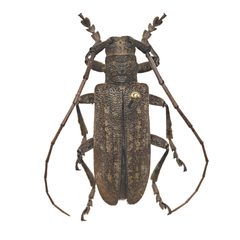
Goes tesselatus is a longhorn beetle ( Cerambycidae) native to North America, where it has been documented in the United States and Canada. Originally described by Haldeman in 1847 under the Monohammus, it was later transferred to the genus Goes. The is commonly known as the Oak Sapling Borer or White Oak Borer, suggesting an association with oak trees (Quercus spp.), though specific ecological details remain limited in published sources.
Pronunciation
How to pronounce Goes tesselatus: /goʊz tɛsɛˈlætəs/
These audio files are automatically generated. While they are not always 100% accurate, they are a good starting point.
Images
Distribution
United States and Canada. GBIF records confirm presence in both countries, with distribution centered in North America.
Host Associations
- Quercus - suspected 'Oak Sapling Borer' suggests association with oak trees, but specific documentation is limited
Similar Taxa
- Goes pulcher in the same , likely similar in general body form and size; distinguished by specific elytral pattern and coloration details
- Goes debilisAnother North American ; separation requires examination of antennal length, pronotal shape, and elytral sculpturing
More Details
Nomenclatural history
The was originally described as Monohammus tesselatus by Haldeman in 1847. The Goes was established later, and the species was transferred to this genus. The feminine ending 'tesselata' has been used in some sources, though 'tesselatus' (masculine, agreeing with Goes) is the accepted form.
Data limitations
Despite being described in 1847, published ecological and biological information for this appears sparse. Most available information is taxonomic and distributional rather than behavioral or ecological.
Sources and further reading
- BugGuide
- Wikipedia
- GBIF taxonomy match
- iNaturalist taxon
- Catalogue of Life
- Peacock Jumping Spider Goes Viral! | Bug Squad
- Shapiro Records First-of-the-Year Cabbage White Butterfly: 'Pop Goes the Pieris' | Bug Squad
- Pop! goes the beetle | Beetles In The Bush
- BitB Goes dSLR | Beetles In The Bush
- Nota Lepidopterologica goes advanced open access with Pensoft Publishers | Blog
- Stinking Here and There: Invasive Stink Bug Goes From Crops to Homes