
Goes tigrinus
(De Geer, 1775)
White Oak Borer
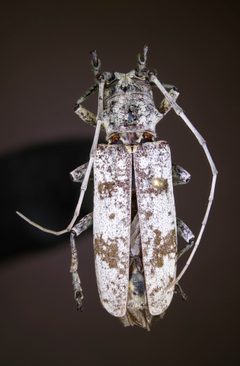
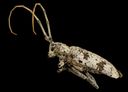
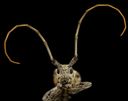
Goes tigrinus is a longhorn beetle in the Cerambycidae, commonly known as the White Oak Borer. It was described by De Geer in 1775 and is native to North America. The is known to infest oak trees, with larvae boring into wood and potentially causing structural damage to trees.
Pronunciation
How to pronounce Goes tigrinus: /ɡoʊz tɪˈɡraɪnəs/
These audio files are automatically generated. While they are not always 100% accurate, they are a good starting point.
Images
Habitat
Associated with oak forests and woodlands; larvae develop within oak wood (Quercus spp.)
Distribution
North America: United States, Canada (Ontario), and Mexico
Diet
Larvae bore into and feed on oak wood; specific feeding habits of are not documented in available sources
Host Associations
- Quercus - larval oak trees
Life Cycle
Larval stage develops within oak wood, boring through heartwood; complete with , larva, pupa, and stages
Ecological Role
Wood-boring whose larvae contribute to decomposition of oak wood and nutrient cycling in forest ; may also act as a pest in managed oak stands
Human Relevance
Considered a pest of oak trees; larval boring can weaken timber and damage living trees, potentially affecting forestry and timber industries
Similar Taxa
- Other Goes speciescongeneric share similar and oak-boring habits; precise identification requires examination of specific morphological characters not detailed in available sources
- Other Cerambycidae (longhorn beetles)general resemblance in body form; distinguished by specific antennal, pronotal, and elytral characteristics particular to Goes tigrinus
More Details
Taxonomic history
Originally described under the Cerambyx by De Geer in 1775; later transferred to genus Goes. The epithet has appeared as both 'tigrinus' and 'tigrina' in literature.
Sources and further reading
- BugGuide
- Wikipedia
- GBIF taxonomy match
- iNaturalist taxon
- NCBI Taxonomy
- Catalogue of Life
- Peacock Jumping Spider Goes Viral! | Bug Squad
- Shapiro Records First-of-the-Year Cabbage White Butterfly: 'Pop Goes the Pieris' | Bug Squad
- Ground nesting bees beware of the bee fly: Bombyliidae — Bug of the Week
- Pop! goes the beetle | Beetles In The Bush
- Nota Lepidopterologica goes advanced open access with Pensoft Publishers | Blog
- Stinking Here and There: Invasive Stink Bug Goes From Crops to Homes