
Eupogonius pauper
LeConte, 1852
Pauper Longhorned Beetle
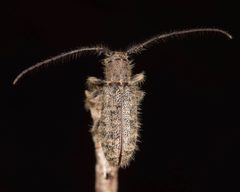
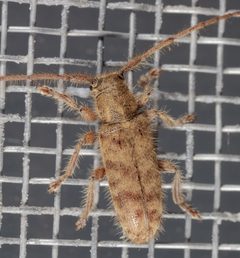
Eupogonius pauper is a small longhorned beetle in the Cerambycidae, described by John Lawrence LeConte in 1852. It is known from the United States and Canada, with records extending from Manitoba and Ontario to the eastern United States. The species is associated with dead wood of various hardwood trees, including pawpaw (Asimina triloba). It belongs to the tribe Desmiphorini and is one of numerous small, brownish eupogonine species that are often difficult to distinguish without close examination.

Pronunciation
How to pronounce Eupogonius pauper: /juːˈpɒɡəniəs ˈpaʊpər/
These audio files are automatically generated. While they are not always 100% accurate, they are a good starting point.
Identification
Eupogonius pauper is a small longhorned beetle, typical of the Eupogonius in its compact body form and relatively short compared to many cerambycids. in this genus are generally small (typically under 10 mm), brown to reddish-brown in coloration, with relatively uniform . Definitive identification to species level requires examination of genitalic characters and comparison with , as external morphological differences among Eupogonius species are subtle. The species name 'pauper' (Latin for 'poor') may allude to relatively reduced or simple morphological features compared to , though this interpretation is speculative.
Images
Habitat
Associated with dead wood of hardwood trees, including pawpaw (Asimina triloba). Has been reported from bottomland forests and mesic woodland where trees occur.
Distribution
United States (eastern and central regions) and Canada (Manitoba, Ontario, Québec). GBIF records confirm presence in North America with specific Canadian provincial records.
Diet
Larvae develop in dead wood of hardwood trees; likely feed on woody tissues or associated fungal growth. Specific dietary details beyond wood-boring habit are not documented.
Host Associations
- Asimina triloba - larval Dead wood of pawpaw reported as a substrate
Life Cycle
Complete with wood-boring larval stage. Larvae tunnel in dead hardwood, pupate within wood, and emerge as . Specific developmental timing and duration unknown.
Ecological Role
Decomposer; contributes to nutrient cycling in forest through wood degradation. Larval tunneling creates microhabitats in dead wood.
Human Relevance
Minor significance. Occasionally encountered in connection with pawpaw or study. Not an economically important pest .
Similar Taxa
- Eupogonius tomentosusCongeneric with similar small size, brown coloration, and dead wood association; external highly similar, requiring genitalic examination for separation
- Urgleptes querciAlso reported from pawpaw dead wood and similarly small and ; differs in -level characters including antennal structure and pronotal form
- Elaphidion mucronatumShares pawpaw association and wood-boring habit; larger size and distinct antennal distinguish it