
Urgleptes querci
(Fitch, 1858)
Oak Long-horned Beetle
Urgleptes querci is a of longhorn beetle in the Cerambycidae, first described by Asa Fitch in 1858. It is a small to medium-sized cerambycid native to eastern North America, where it develops in dead wood of various hardwood trees. The species is highly and has been recorded from multiple plants including oak, pawpaw, and other deciduous trees. are active during the growing season and are likely or , as is typical for many Lamiinae.
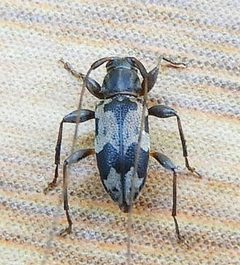
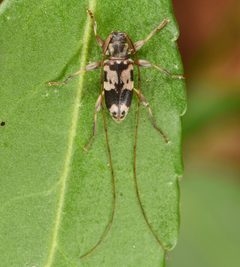
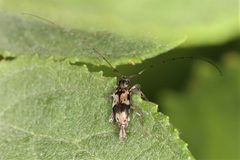
Pronunciation
How to pronounce Urgleptes querci: /ʊrˈɡlɛptəs ˈkwɛr.si/
These audio files are automatically generated. While they are not always 100% accurate, they are a good starting point.
Images
Habitat
Develops in dead wood of deciduous trees; found in forested and woodland with suitable material.
Distribution
Eastern North America; recorded from Ontario and Québec in Canada, and throughout the eastern United States.
Diet
Larvae feed internally in dead wood of hardwood trees; highly , with records from oak (Quercus), pawpaw (Asimina triloba), and other deciduous .
Host Associations
- Quercus - larval dead wood
- Asimina triloba - larval dead wood; reared from dead pawpaw wood
Life Cycle
Complete with , larval, pupal, and stages. Larvae are wood-borers that develop in dead hardwood, pupating within the wood before emerging as adults. Specific timing of not documented.
Ecological Role
Decomposer; contributes to nutrient cycling by breaking down dead hardwood in forest .
Similar Taxa
- Elaphidion mucronatumBoth are cerambycids associated with dead wood of eastern hardwoods; E. mucronatum is larger and has distinct spined .
- Eupogonius pauperSimilar size and ; both reared from pawpaw and other hardwoods, but E. pauper belongs to different tribe (Desmiphorini) with different antennal proportions.
More Details
Taxonomic Note
Originally described as Leiopus querci by Fitch in 1858; later transferred to Urgleptes. Some sources cite 1859 as the publication year.
Collection Records
Documented rearing records include dead wood of pawpaw (Asimina triloba) in Missouri, where it was found alongside Elaphidion mucronatum and Eupogonius pauper.