
Eupogonius tomentosus
(Haldeman, 1847)
Tomentous Longhorned Beetle
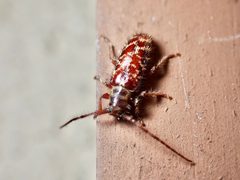
Eupogonius tomentosus is a longhorned beetle (Cerambycidae) described by Haldeman in 1847. It is one of approximately 40 in the Eupogonius, which is characterized by small to medium-sized beetles with dense . The species has not been evaluated for conservation status. It occurs in Canada and the United States, excluding Hawaii and Alaska.
Pronunciation
How to pronounce Eupogonius tomentosus: /juːpəˈɡoʊniəs təˈmɛntoʊsəs/
These audio files are automatically generated. While they are not always 100% accurate, they are a good starting point.
Identification
Eupogonius are small to medium-sized longhorned beetles in the tribe Desmiphorini. E. tomentosus can be distinguished from by its dense tomentose covering the body. Accurate identification to species level typically requires examination of antennal proportions, elytral punctation patterns, and genitalic structures. The is taxonomically challenging and may require confirmation.
Images
Distribution
Recorded from Canada (Manitoba, Ontario) and the United States. Excluded from Hawaii and Alaska. The Eupogonius is primarily Nearctic in distribution.
Similar Taxa
- Other Eupogonius speciesApproximately 40 occur in North America, many with similar small size and pubescent bodies. E. tomentosus is distinguished by its particularly dense tomentose covering, but microscopic examination is often required for definitive separation.
- Desmiphorini genera (e.g., Desmiphora, Microcoremia)Members of the same tribe share small to medium size and often dense . Eupogonius typically has shorter relative to body length and different pronotal shape.
More Details
Taxonomic History
Described by Samuel Stehman Haldeman in 1847, a prominent early American naturalist who made significant contributions to entomology and malacology. The has remained in the Eupogonius, though the higher classification of Desmiphorini has undergone revisions.
Etymology
The specific epithet 'tomentosus' derives from Latin 'tomentum' meaning wool or stuffing, referring to the dense, matted hair-like covering on the 's surface.