
Thryallis
Thomson, 1858
Species Guides
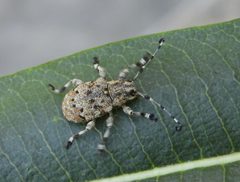
1Thryallis is a of longhorn beetles (Cerambycidae: Lamiinae: Anisocerini) established by Thomson in 1858. The genus is known to include that function as wood-boring agricultural pests. Thryallis undatus has been documented damaging Persian lime orchards in Veracruz, Mexico, where larvae tunnel into trunks and branches causing tree mortality. The genus name has been subject to nomenclatural confusion with a plant genus of the same name in Malpighiaceae.
Pronunciation
How to pronounce Thryallis: /ˈθraɪ.ə.lɪs/
These audio files are automatically generated. While they are not always 100% accurate, they are a good starting point.
Identification
Distinguished from related cerambycid by tribal placement in Anisocerini; specific diagnostic characters for the genus require examination of antennal structure, pronotal shape, and elytral . The Thryallis undatus is characterized by typical of the genus. Separation from Aegomorphus and other Lamiinae genera in the same orchards requires careful examination of elytral tuberculation and antennal proportions.
Images
Habitat
Associated with woody plants; documented in cultivated Persian lime orchards in tropical/subtropical regions. Larvae develop within trunks and branches of living trees.
Distribution
occurs in the Neotropical region. Thryallis undatus recorded from Martínez de la Torre municipality, central Veracruz state, Mexico.
Host Associations
- Citrus latifolia - larval Persian lime; first record for on Rutaceae
- Rutaceae - -level associationfirst documented association with this plant
Life Cycle
Larvae create galleries 2–5 cm deep in trunks and branches. In stressed trees, galleries may encircle trunk or branches, disrupting nutrient transport. Developmental timing and details not documented.
Behavior
oviposit on trunks and branches of trees. Damage severity increases in trees previously affected by vascular or nutrient deficiencies.
Ecological Role
Agricultural pest; borer causing direct damage to commercial citrus production. In sampled Persian lime orchards, average was 10.8%.
Human Relevance
Economic pest in major Persian lime production regions of Mexico. Damage includes branch desiccation and complete tree death, necessitating monitoring and potential management interventions.
Similar Taxa
- Aegomorphus quadrigibbusSympatric cerambycid causing similar damage in same Persian lime orchards; both create oviposition holes and larval galleries, requiring careful morphological differentiation
- Galphimia (plant genus)Nomenclatural homonym; Thryallis was formerly used for some Galphimia in horticultural trade, but the is unrelated
Misconceptions
The name Thryallis is shared with a plant genus in Malpighiaceae (shrubs and woody vines of Brazil, Paraguay, and Bolivia), leading to potential confusion in literature searches. The plant genus is characterized by stellate hairs and petals with limb wider than long—traits irrelevant to the genus.