
Lepturges symmetricus
(Haldeman, 1847)
Lepturges symmetricus is a of longhorn beetle in the Lamiinae, first described by Samuel Stehman Haldeman in 1847. It belongs to the tribe Acanthocinini within the Cerambycidae. The species is known from North America, with records from Canada (Ontario, Québec) and the United States. Like other members of the Lepturges, it is a small to medium-sized cerambycid beetle, though specific diagnostic features distinguishing it from require close examination.
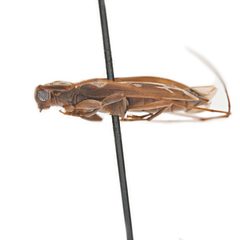
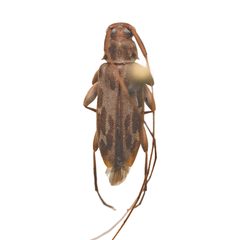
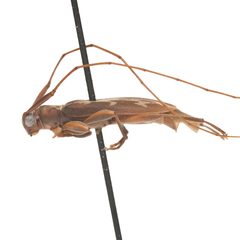
Pronunciation
How to pronounce Lepturges symmetricus: /lɛpˈtɜːrdʒiːz sɪˈmɛtrɪkəs/
These audio files are automatically generated. While they are not always 100% accurate, they are a good starting point.
Images
Distribution
North America. Documented from Canada: Ontario and Québec. GBIF records indicate presence in Canada, with specific provincial records for Ontario and Québec.
Similar Taxa
- Lepturges confluensBoth are congeneric members of Lepturges, occur sympatrically in eastern North American forests, and have been collected together at blacklight traps in Missouri. They share similar size range and general body form, requiring examination of elytral maculation patterns for reliable separation.
- Lepturges angulatusAnother congeneric described by LeConte in 1852, with which L. symmetricus may be confused. Both species have been reared from dead branches of woody plants and share similar ecological associations in eastern deciduous forests.
- Lepturges regularisA congeneric that is very uncommonly encountered and has been reared from dead branches of red buckeye (Aesculus pavia) in Missouri. Similar small size and general facies require careful examination for identification.
More Details
Taxonomic history
The was established by Samuel Stehman Haldeman in 1847, an early American naturalist who made significant contributions to the study of North American insects. The specific epithet 'symmetricus' likely refers to some aspect of the species' symmetrical appearance, though the original description has not been examined for this record.
Collection methods
Based on observations of , L. symmetricus is likely attracted to ultraviolet and mercury-vapor lights at night, and may be captured in ethanol-baited traps. A related was collected in an ethanol-only trap in dry-mesic upland deciduous forest in Missouri, suggesting similar trapping methods may be effective for this species.