
Dendrobias mandibularis
Dupont, 1834
Long-jawed Longhorn Beetle
Species Guides
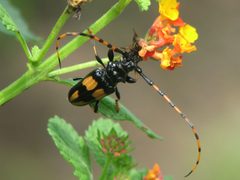
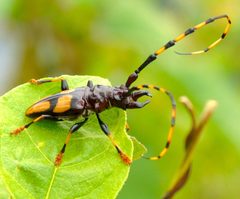
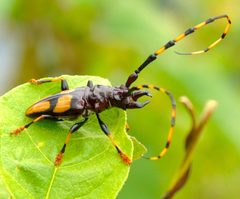
1Dendrobias mandibularis is a of longhorn beetle (Cerambycidae) described by Dupont in 1834. The species is notable for its enlarged , particularly in males. It has been collected in desert thorn-scrub in Arizona and is associated with Baccharis sarothroides vegetation. The species exhibits in mandible development, with major males possessing substantially enlarged jaws.
Pronunciation
How to pronounce Dendrobias mandibularis: //dɛnˈdroʊ.bi.as mænˌdɪˈbjuː.lə.rɪs//
These audio files are automatically generated. While they are not always 100% accurate, they are a good starting point.
Identification
Males are readily distinguished by their greatly enlarged, prominent —described as 'major males' with exceptionally developed jaws. The can be separated from the similar Trachyderes mandibularis (now considered a synonym) by genitalic and structural features. In the field, it may be confused with other large cerambycids in the Trachyderini, but the mandibular development in males is distinctive. Specimens have been described as having a 'big, major male' form with conspicuous mandibular armature.
Images
Habitat
Desert thorn-scrub vegetation, particularly areas with Baccharis sarothroides (desert broom). Collections have occurred in recently rained with green vegetation and blooming acacia. The occupies lower-elevation desert areas with mixed shrub vegetation including creosote (Larrea tridentata) and sweet acacia (Acacia rigidula).
Distribution
Documented from Arizona, USA, specifically from vicinity Naco and Continental in the southern part of the state. GBIF records indicate presence in Middle America and North America. The appears to be associated with the Sonoran Desert region and adjacent sky island .
Seasonality
Active during summer monsoon season; collected in July–August. Activity appears correlated with rainfall events and subsequent vegetation green-up and flowering.
Host Associations
- Baccharis sarothroides - collected onPrimary plant association documented from multiple collecting events
Behavior
Males are known for their enlarged , suggesting potential use in male-male combat or mate competition. Specimens have been observed resting on plant foliage during daylight hours. The appears to be diurnally active and has been collected by visual searching on host plants rather than by beating or blacklighting.
Human Relevance
Of interest to coleopterists and cerambycid collectors due to the distinctive male . Not documented as an agricultural or forestry pest.
Similar Taxa
- Trachyderes mandibularisFormerly considered distinct but now synonymized; historically confused due to similar mandibular development and size
- Stenaspis solitariaSympatric in Arizona desert and associated with similar Acacia vegetation; distinguished by different antennal and body proportions, lacks enlarged
- Stenaspis verticalisFound in same region and type (Baccharis sarothroides); distinguished by annulated and different pronotal shape