
Dendrobias
Dupont, 1834
Species Guides
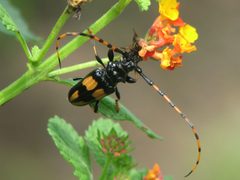
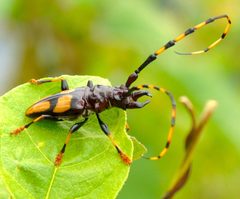
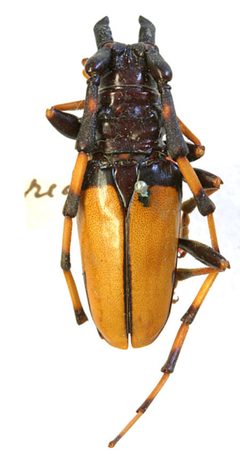
1- Dendrobias mandibularis(Long-jawed Longhorn Beetle)
Dendrobias is a of longhorn beetles (Cerambycidae) established by Dupont in 1834. The genus was restored from synonymy under Trachyderes in 2018, having been previously included within that genus for several years. It contains three described distributed in the southwestern United States and Mexico. Members are associated with desert thorn-scrub and riparian , particularly with Baccharis and Acacia vegetation.
Pronunciation
How to pronounce Dendrobias: //dɛnˈdroʊ.biːəs//
These audio files are automatically generated. While they are not always 100% accurate, they are a good starting point.
Identification
Distinguished from the closely related Trachyderes by taxonomic revision (2018) rather than obvious external characters; separation requires examination of genitalic and other subtle morphological features. The enlarged of major males are distinctive within the Trachyderini, though similar mandibular development occurs in other trachyderine genera. Presence on Baccharis sarothroides in desert riparian corridors of southern Arizona and adjacent Mexico may aid field recognition.
Images
Habitat
Desert thorn-scrub and riparian corridors in arid regions. Specifically associated with Baccharis sarothroides (desert broom) and Acacia . characterized by sandy or gravelly substrates with mixed woody vegetation including mesquite, creosote, and desert broom. Elevation range appears to include lower desert elevations up to moderate foothill zones.
Distribution
Southwestern United States (southern Arizona) and Mexico. Documented from localities near Naco and Continental, Arizona, extending southward into Mexican territory. Distribution appears to track suitable Baccharis-Acacia corridors in the Sonoran Desert and adjacent regions.
Seasonality
activity recorded during summer monsoon season (July–August) in Arizona. Peak activity likely coincides with summer rainfall patterns and flowering of vegetation.
Host Associations
- Baccharis sarothroides - association collected from foliage and stems; major males observed on this plant
- Acacia rigidula - association observed in near this
Behavior
are and active on vegetation. Males with enlarged likely engage in combat or display , as observed in other cerambycids. activity occurs during warm daytime conditions. Adults may be found sitting exposed on host plant stems or flying between vegetation patches.
Human Relevance
Of interest to coleopterists and cerambycid due to taxonomic history and distinctive male . Not known to be of economic importance.
Similar Taxa
- TrachyderesFormerly included within this ; separation requires detailed morphological examination including genitalia. Trachyderes mandibularis was the name under which Dendrobias mandibularis was previously known.
- StenaspisCo-occurs in same (Baccharis, Acacia) and shares robust body form; distinguished by antennal structure and male mandibular .
More Details
Taxonomic History
The Dendrobias was established by Dupont in 1834 for D. mandibularis and D. maxillosus. These were subsequently transferred to Trachyderes, where they remained for years. In 2018, the genus was removed from synonymy and restored as valid, with D. steinhauseni added as a third species.
Type Species
Dendrobias mandibularis (Dupont, 1834) is the type of the .